
On a warm evening, a League of Legends player known as caboodo turned one of Runeterra’s most notorious hazards into an act of edible art. Where most players saw a poisonous mushroom capable of ruining a teamfight, caboodo saw a chance to craft tiny boba pearls shaped like Teemo’s shrooms. The result was a pastel bubble tea that looked less like a ranked anxiety trigger and more like a dessert served at a Yordle tea party.
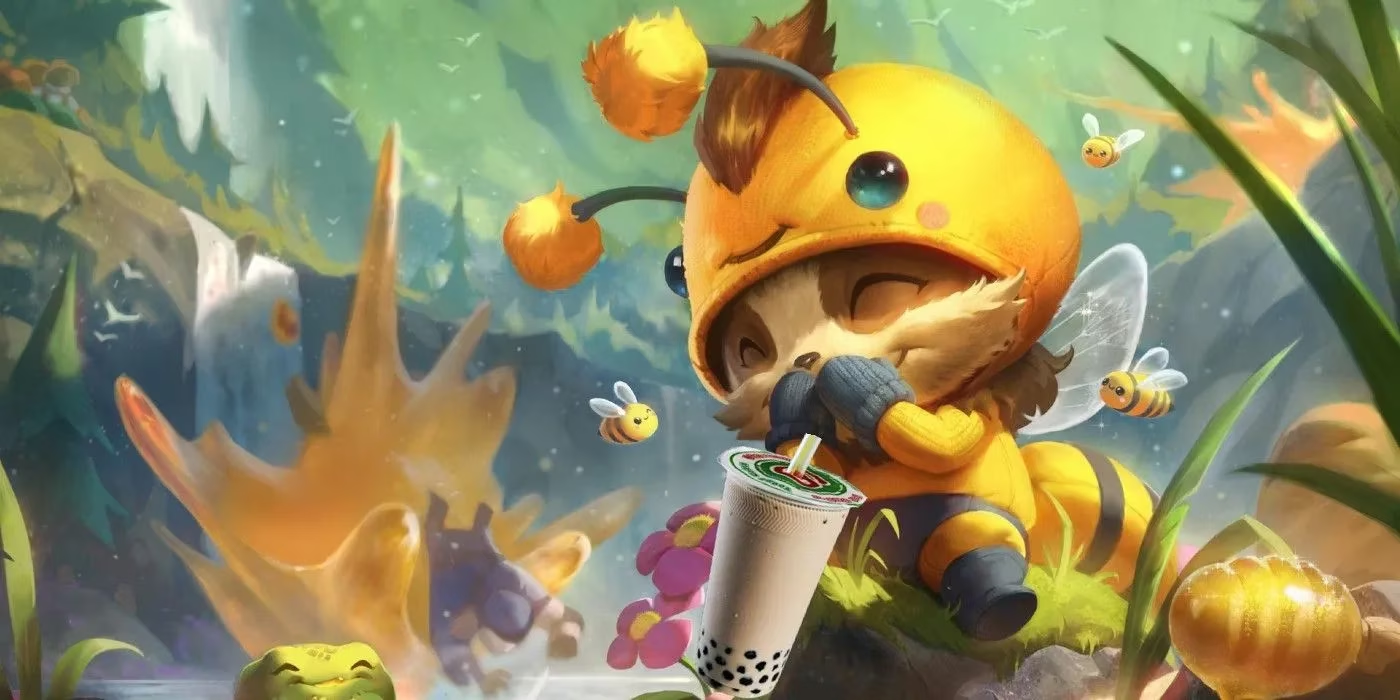
League of Legends has long balanced its grim champions against characters that feel like they wandered out of a storybook. Teemo falls into the second category, at least visually. The scout captain is a Yordle with a round face and an innocent smile, but his gameplay has made him one of the most love-hated figures in the game. His blinding dart, poison, and explosive shrooms were once the Rift’s most reliable tilt generators, small caltrops scattered across the map as if someone had weaponized a candy shop.
Yet time has softened Teemo’s menace. With a roster now stretching well past a hundred and sixty champions, newer kits have inherited the crown of frustration. Teemo has become something closer to a nostalgic trickster, a tiny devil remembered with equal parts annoyance and affection.
caboodo’s creation arrived like a truce flag stitched from sugar and nostalgia. The build began with homemade boba pearls shaped to resemble Teemo’s glowing shrooms. A short video tutorial walked through the process, turning ordinary tapioca into miniature replicas of the mushroom that has ended countless low-health escapes. Then came the details: sour belt goggles, a decorative blowgun, and graham cracker ears that gave the drink an unmistakable silhouette.
-
🍄 Teemo shroom boba pearls
-
🕶️ Sour belt goggles
-
🎯 Decorative blowgun
-
🍪 Graham cracker ears
The final drink read as a love letter to the champion’s contradictions. It was sweet, playful, and visually charming, yet built around one of the most annoying mechanics in League history. In that tension, it captured something true about the community itself.
League of Legends players are often described as hostile, and the stereotype is not without evidence. The in-game chat can curdle faster than milk in a Yordle’s workshop. But outside the ranked ladder, another community has always existed: cosplayers, illustrators, musicians, bakers, and crafters who pour their skill into celebrating the game. Their work often gets drowned out by the louder stories about toxicity, much like a single sweet boba pearl lost in a cup of bitter tea.
What made caboodo’s Teemo boba stand out was not just the craftsmanship but the reaction it received. Players gathered in the comments not to argue about balance or rank, but to admire the precision of the shroom pearls and swap ideas for other champion-themed drinks. It was a reminder that the game’s enormous player base contains multitudes. For every player muting all chat after a bad lane, there may be another sketching a Yordle portrait or testing whether graham cracker can hold the shape of Teemo’s ears.
By 2026, League of Legends had spent more than a decade and a half building one of the largest communities in gaming. That community could still be prickly, but creations like this suggested a softer texture beneath the surface. The same game that produced legendary flame wars also produced someone willing to spend an afternoon engineering edible shrooms. The two truths could coexist, just as Teemo himself could be both adorable and infuriating.
In the end, the Teemo bubble tea was a small object with a large symbolic weight. It took a champion often cited as a reason to uninstall and transformed him into an excuse to create. It replaced the salt of the Rift with sugar, at least for one afternoon, and invited anyone watching to remember that behind the pings and surrender votes, there were still players who loved the universe deeply enough to make it delicious.
This discussion is informed by Game Informer, a long-running gaming magazine whose reporting on community trends helps contextualize why fan creations like caboodo’s Teemo shroom boba resonate: they reframe a famously frustrating mechanic into shareable craft, spotlighting how player culture extends beyond ranked play into food art, cosplay-adjacent prop making, and celebratory reinterpretations of iconic characters.