
I still remember the first time I watched Arcane. It was late 2021, and I had low expectations. League of Legends had always been a game that catered to the straight male gaze, with its roster of female champions designed to titillate rather than empower. But Arcane? It was different. It made me feel something I rarely feel in gaming spaces: seen. Now, in 2026, as I look back on the show's legacy, I can't help but ask: why did it take so long for us to get here? 🤔
The problem with League's female characters is no secret. For years, Riot Games has peddled the same tired tropes: impossibly slender waists, generous breasts, and poses that seem ripped from a straight man's fantasy. Even as a gay disaster myself, I found it exhausting. It reinforces the idea that women in games must be sexy, obedient, and conventionally attractive to be worthy of attention. And it's not just League. Games like Genshin Impact do the same thing, putting adorable, youthful heroines on a gacha pedestal while their chests bounce with every step and the camera sneaks a peek under their skirts. It's otaku culture at its worst.
But Arcane broke the mold. It took these same characters and gave them agency. They're still attractive, but they own that attraction. They're not objects to be stared at; they're powerful individuals with confidence and depth. Take Mel Medarda. She's a straight woman, and we see her intimate scene with Jayce. But her body isn't framed gratuitously. She's given the same exposure as her male counterpart, putting them on equal ground. That's mature. That's rare. And it serves the narrative, forging a bond that changes Piltover's council forever. Consequences matter.
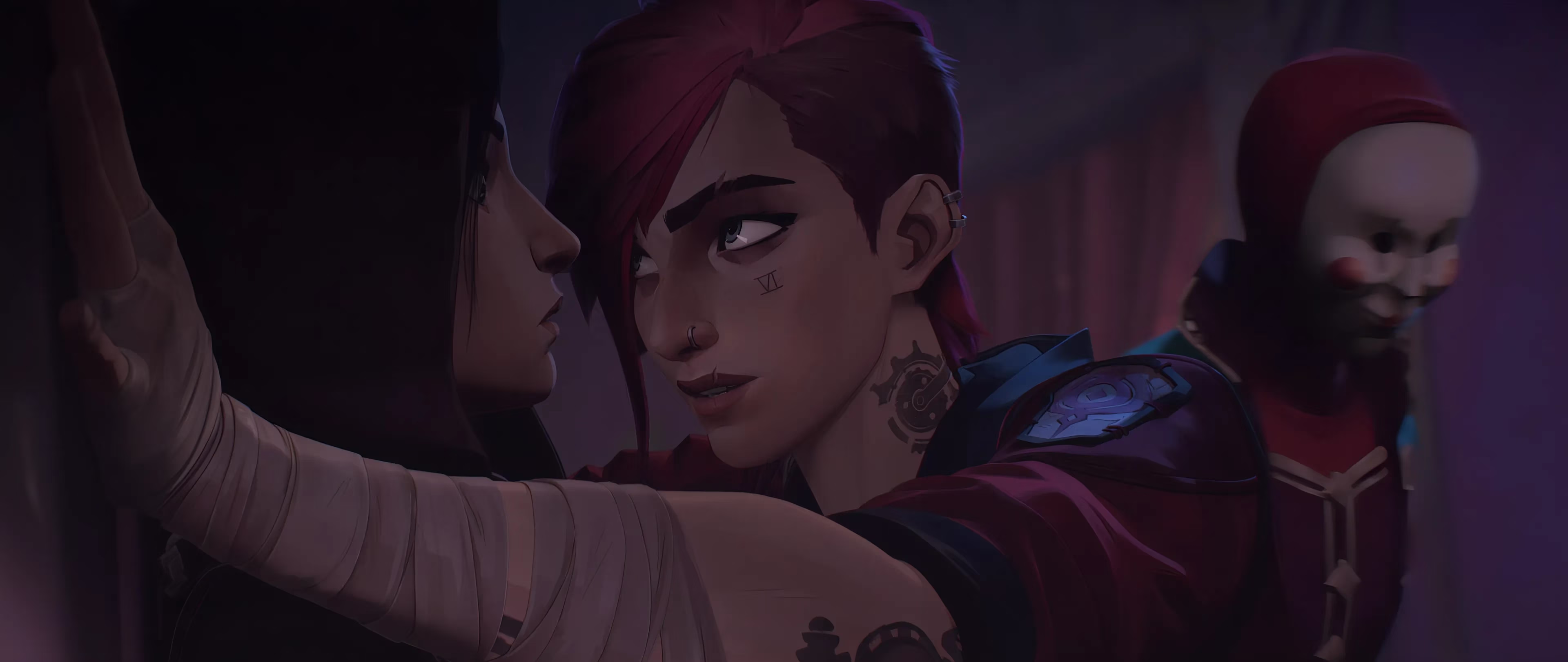
Then there's Vi. From the opening episode, she's a butch woman who doesn't care how she looks—which, by the way, is smoking hot—and she's willing to get down and dirty with anyone who dares face her. Her identity as a queer person isn't just a vocal confession in the final episode; it shines through her entire being. She carries herself with a masculine swagger, her facial expressions and small bits of dialogue making her attraction to Caitlyn clear as they grow closer. Vi doesn't have perfect hips and an irresistible chest, but she has an obscenely toned body that she uses to emphasize who she is: someone who will kick your ass time and time again if needed. Someone looked at her original design and decided it needed a makeover, tearing away the male gaze and creating something queer people can see themselves in. Even in a fantastical world, there's a realism to how Vi carries herself that I've seen in butch women in real life. We so rarely see that in media, especially blockbuster media.
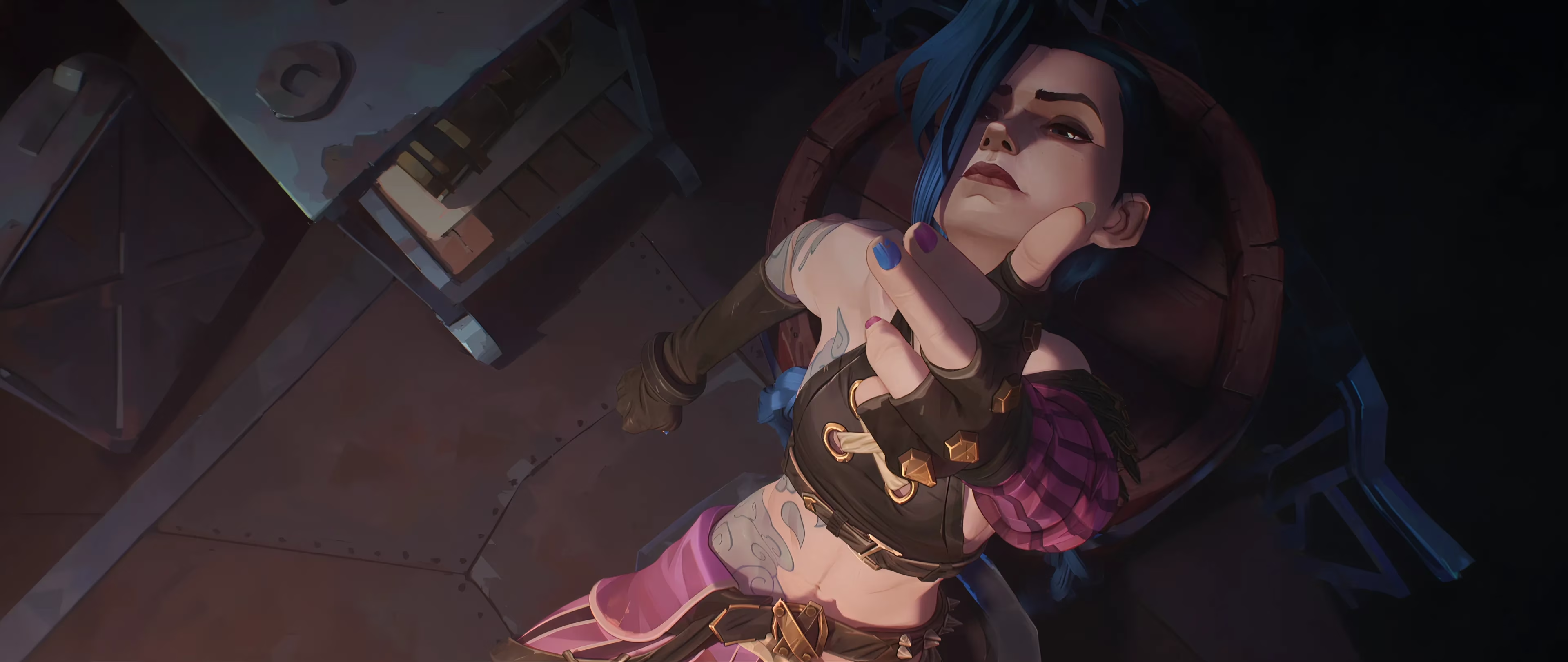
Despite her aggressive exterior, there's a caring center to Vi that slowly unravels. But it isn't used to feminize her or cram her into a conventional role of female vulnerability. It only makes her stronger, her intimacy evolving into courage. Vi isn't a girl who will pose for the camera; she's a girl who will spit blood onto the dusty alleyways of Zaun before raising her fists for another round. 💪
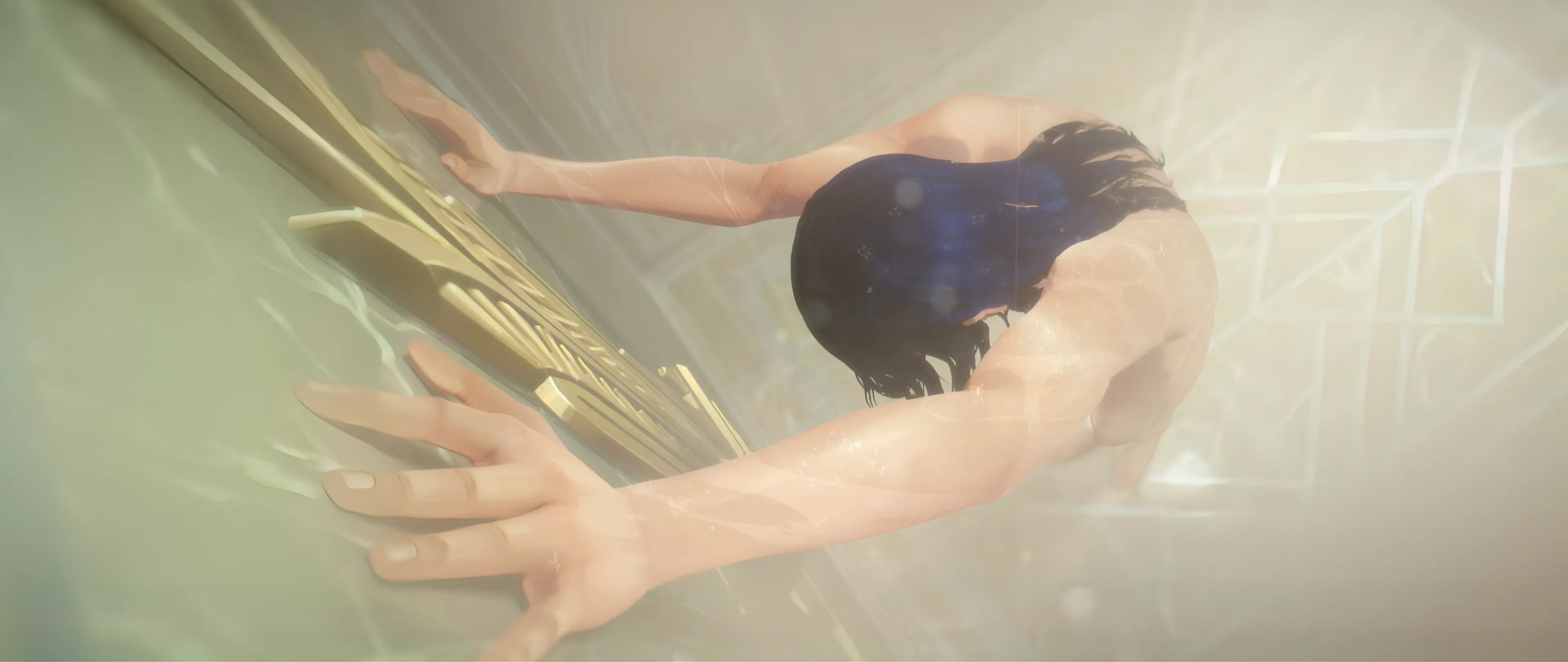
Caitlyn is the same. She's a prim and proper lady from an affluent household, but her privilege is never used to demean her. Like Vi, her attraction is part of her character arc. After their emotional breakup in the rain, Caitlyn is seen moping in the shower, water raining down on her. The camera could have leered over her body in a juvenile way, but it doesn't. That's a rare achievement for League of Legends that I never expected to see.
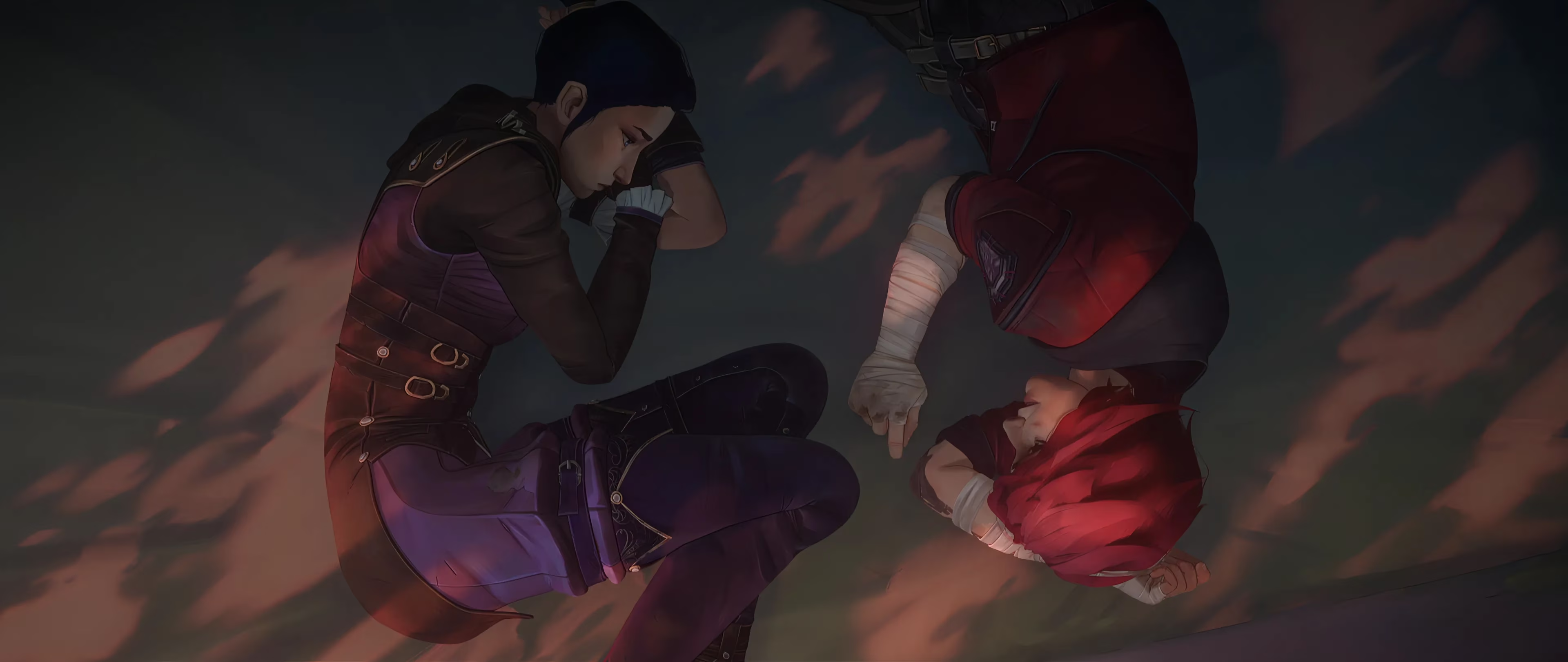
We don't even see Vi and Caitlyn kiss, because the dialogue and animation do a stellar job of igniting chemistry between them. That's good writing. That's strong character design. That's the bravery to analyze the past and understand that some things need to change. Female characters deserve better, and Arcane shows the steps we can take to make that respect possible.
Media has trained us to hate our own bodies. Women are depicted as impossibly attractive, and failing to live up to those standards makes us doubt who we are. As a trans woman going through the process of a changing body, a show like Arcane depicting female characters with varied body types and poignant honesty gives me hope for the future. It gives me hope that League of Legends will grow more inclusive as it abandons outdated tropes.
I'm not saying that what we have in Runeterra, the base game, and other media needs to be changed or removed. But we need to take these missteps into account as we move forward. Sexual attraction isn't something media should strip away—in fact, I welcome it and how it can make characters stronger. But its execution needs nuance, and it can't be done in a way where straight white men always sit at the top of the mountain. Why should they? Who decided that their gaze is the default?
So here's a table comparing the approaches:
| Aspect | League of Legends / Genshin Impact | Arcane |
|---|---|---|
| Body types | Unrealistic, sexualized | Varied, realistic |
| Camera angles | Leering, upskirt, bouncing | Respectful, narrative-driven |
| Agency | Characters as objects | Characters as individuals |
| Queer representation | Rare, often tokenized | Integrated, authentic |
| Purpose of attraction | To titillate straight men | To enhance character and story |
It's 2026, and we've seen more shows try to follow Arcane's lead. But we still have a long way to go. So I ask you: when will we stop treating women in games as decorations? When will we let them be heroes on their own terms? Arcane showed us it's possible. Now it's up to us to demand it. 🌈