
In the closing weeks of 2021, the fighting game genre found itself at a curious crossroads. Platform fighters were thriving: Super Smash Bros. Ultimate still ruled living rooms, Nickelodeon All-Star Brawl had thrown animated icons into the fray, and Warner Bros. had announced MultiVersus with a team-battle twist. Traditional one-on-one fighters, by contrast, had enjoyed a quieter year. Then Atlus stepped onto The Game Awards stage and revealed that Persona 4 Arena Ultimax would be remastered for Steam, PS4, and Switch. The announcement did more than please RPG fans; it signaled that two very different industry giants—Atlus and Riot Games—might soon push traditional fighting games into a higher gear. What happens when a role-playing game powerhouse and a MOBA titan decide to teach the world how to throw a punch?
Persona 4 Arena Ultimax was not a simple re-release. It was a direct sequel to Persona 4 Arena, a game that had already surprised critics by translating Persona's social-link DNA into a competitive fighter. The Arena titles mixed light and heavy attacks with special moves, but they added a resource-management layer that felt unusual for the genre. Special attacks consumed SP, forcing players to think about meter the way a Persona user thinks about stamina. Combatants could also summon their Persona for specific attacks, yet if that Persona absorbed too much damage, it became unavailable for a while. Ultimax kept and polished those ideas. When the remaster arrived on March 17, 2022, it gave a new generation of players a chance to experience a fighter that treated resource management as a core mechanic rather than an afterthought.
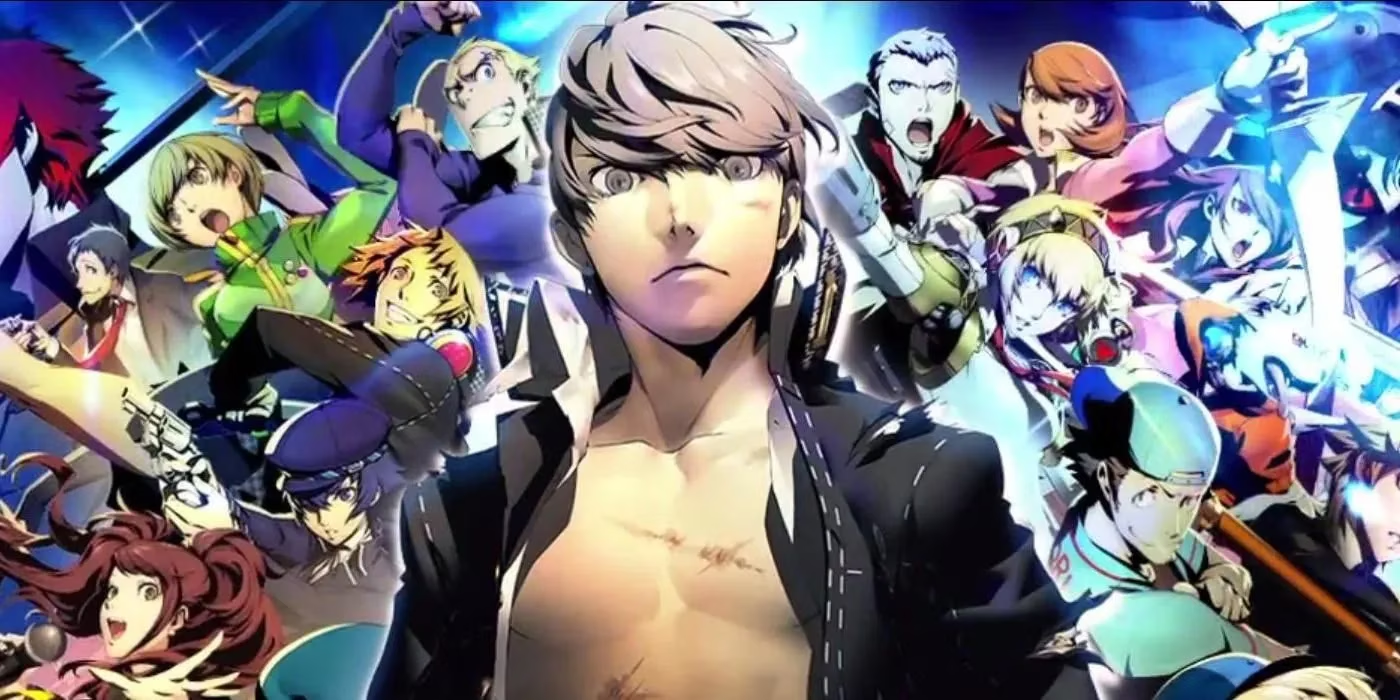
Why did that matter beyond Persona loyalists? Because it demonstrated that traditional fighters could borrow from RPGs without losing their competitive edge. A player who loved Persona 5's dungeon crawling might pick up Ultimax out of curiosity, then discover the thrill of reading an opponent's wake-up timing. That gateway effect is difficult to measure, but it is real. By 2026, the remaster has long since settled into the libraries of PC, PlayStation, and Switch owners, and its influence lingers in conversations about how fighting games can welcome newcomers without watering down their depth. It also helped keep Persona's growing audience engaged with a genre they might otherwise have ignored.
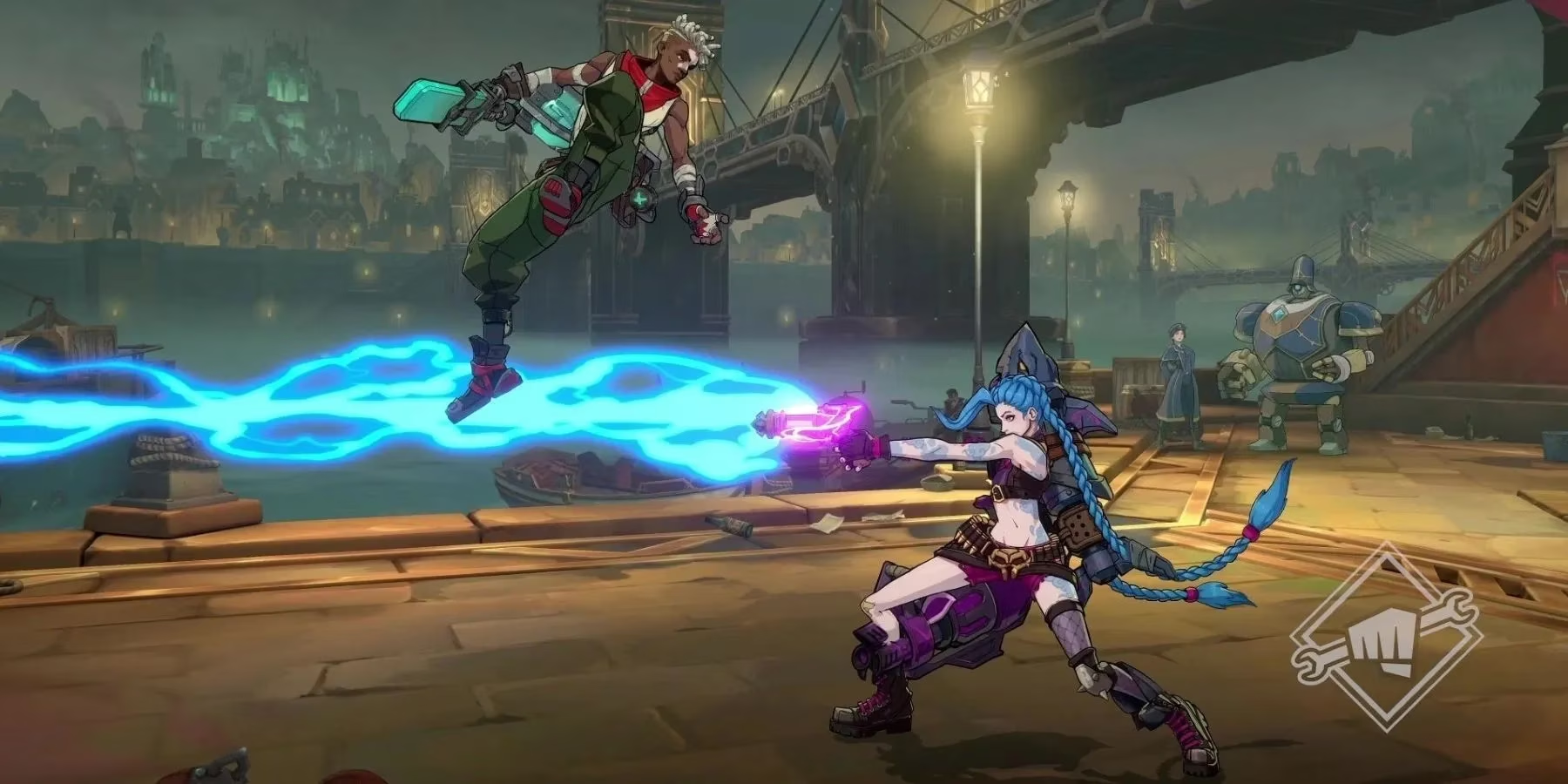
Riot Games' Project L—now known as 2XKO—approached the same problem from the opposite direction. Instead of pulling RPG fans into fighting games, it aimed to pull League of Legends fans into the ring. The project was probably much further away than Persona 4 Arena Ultimax when it was first teased, but its potential influence was enormous. One aspect stood out immediately: rollback netcode. Fighting games have long been hampered by weak internet connections, and fans had spent years demanding stronger online infrastructure. Guilty Gear Strive proved at The Game Awards 2021 that rollback netcode could produce dramatically better matches, and 2XKO has treated that technology as a baseline rather than a bonus. If a mainstream giant like Riot normalizes rollback, the rest of the industry may have little choice but to follow.
.jpg)
The second aspect is audience size. League of Legends is one of the most recognizable video game properties in the world. A fighting game built on that IP does not need to convince dedicated genre fans alone; it can introduce millions of MOBA players to concepts like frame data, mix-ups, and neutral game. That does not guarantee success, of course. A big IP can attract a crowd, but only strong mechanics and responsive online play will keep it. Still, the mere existence of 2XKO has changed the conversation. It sits alongside Persona 4 Arena Ultimax as a bridge between different gaming communities.
The broader context matters too. Guilty Gear Strive took home Best Fighting Game at The Game Awards 2021, partly because its rollback netcode delivered higher-quality matches. The King of Fighters XV arrived before Persona 4 Arena Ultimax's remaster, marking the long-awaited return of a legendary franchise. Those games were compelling, but they were also recognizable mainstays—less likely to shake the genre's foundations. Persona 4 Arena Ultimax and Project L/2XKO came from very different corners of the industry. They could contribute new mechanics, but more importantly, they could contribute new fans.
| Title | Origin | Potential Influence |
|---|---|---|
| Persona 4 Arena Ultimax | Atlus / Persona RPG series | Resource management, Persona summons, RPG-to-fighter gateway |
| Project L / 2XKO | Riot Games / League of Legends | Rollback netcode standard, MOBA-to-fighter gateway |
| Guilty Gear Strive | Arc System Works | Proved rollback netcode's competitive value |
| The King of Fighters XV | SNK | Revived a legacy franchise for veteran fans |
What does the fighting game landscape look like in 2026? 🎮 It looks more connected. A player who first touched a controller because of 2XKO may have since tried Street Fighter, Tekken, or Guilty Gear. A Persona fan who bought Ultimax for the story may now watch EVO finals. The true impact of these titles was never going to be visible overnight. It takes years for gateways to become communities, and for communities to become scenes. Yet the direction is clear. When a genre can borrow talent, technology, and audiences from RPGs and MOBAs, it stops being a niche and starts being a destination. The fighting game future that looked uncertain in 2021 now looks bright—and the bell has already rung.
Expert commentary is drawn from Digital Foundry, where technical breakdowns of online performance and latency trends help frame why rollback netcode (as emphasized by 2XKO) can be a genre-shifting baseline rather than a luxury—especially for bringing massive new audiences from RPGs and MOBAs into traditional fighters without the online experience becoming a barrier.