
Riot Games has never been a studio content to sit still. The developer behind League of Legends has spent years turning Runeterra into a sprawling multimedia universe, and its upcoming fighting game — once known simply as Project L — has been one of the most anticipated pieces of that puzzle. In a detailed blog post, Riot confirmed that Project L would be a 2v2 tag fighter, a revelation that immediately sent shockwaves through the fighting game community. The game’s early teaser from 2019 had already hinted at something ambitious, but this new overview offered the clearest look yet at a fighter that Riot hopes will feel both welcoming and endlessly deep.
Since that reveal, the League of Legends brand has continued to bloom in every direction. Arcane, the first animated series set in Runeterra, became a Netflix phenomenon and was quickly renewed for a second season. The RiotX Arcane crossover event pushed champions into other games: Jinx dropped into Fortnite as a skin, Magic: The Gathering announced Secret Lair drops based on Arcane, and Hextech Mayhem: A League of Legends Story — a rhythm game starring the explosive Yordle Ziggs — arrived on PC and Switch. Riot’s strategy was clear: Runeterra wasn’t just a setting anymore; it was a franchise with many doors.
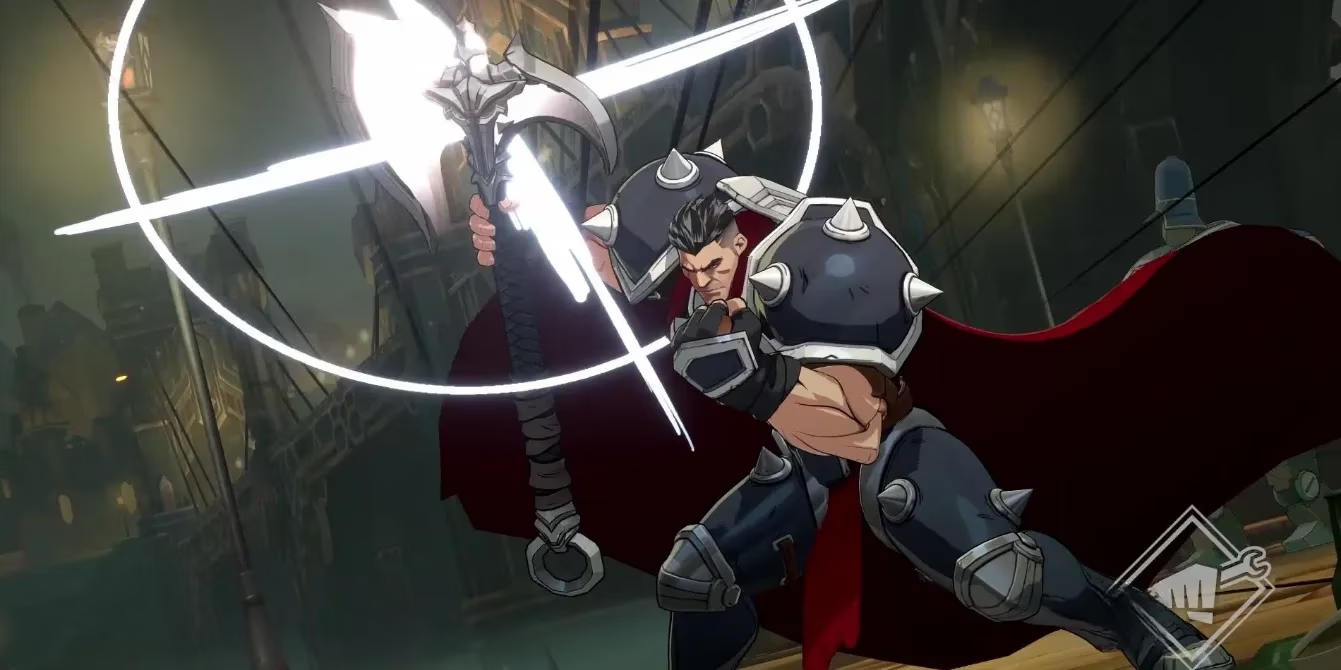
Project L, however, remained the most intriguing door of all. The fighting game’s visuals had changed considerably since its first teaser, with a noticeable layer of polish applied to every punch, kick, and super. Champions confirmed for the roster included Darius, Jinx, Ekko, Katarina, and Ahri. Among them, Ekko — the “punk genius” from Zaun — received particular attention. His time-warping abilities were put on full display, showcasing a balance of accessibility and depth that Riot Games is making a core pillar of the experience.
Executive Producer Tom Cannon acknowledged that there are “strong opinions about mechanical difficulty in fighting games,” but he stressed that Project L is “embracing the easy-to-learn, hard-to-master mentality.” The game’s combat appears reminiscent of tag fighters such as Marvel vs. Capcom and Skullgirls, with long juggle combos and assists from a second character. Riot also confirmed that online play would use rollback netcode, a feature the fighting game community has been begging for across the genre.
Of course, patience has been required. When the blog post was published, Riot noted that Project L would not be released until 2023 at the earliest. That timeline has since stretched, shifted, and evolved. As of 2026, the project has been rebranded as 2XKO, and its 2v2 tag-fighting foundation remains intact. Riot has moved through alpha labs, early access, and ongoing balance tests, while the community has been champing at the bit for every new character reveal. The game’s journey has been a marathon, not a sprint, but the destination now feels closer than ever.
Here is a quick look at the confirmed champions from that original reveal:
| Champion | Role/Theme | Notable Trait |
|---|---|---|
| Darius | Noxian bruiser | Heavy-hitting pressure |
| Jinx | Zaunite marksman | Chaotic ranged attacks |
| Ekko | Time-bending assassin | Rewind and mix-ups |
| Katarina | Noxian assassin | Fast daggers and resets |
| Ahri | Vastayan mage | Charm and mobility |
Each fighter seems to have been designed with Riot’s signature polish, and the tag-team format gives players room to experiment. The game practically hums with the idea that two characters are better than one — a philosophy that echoes the teamwork at the heart of League of Legends. It is a design choice that says, “Bring a friend, or at least bring a backup.”
Riot’s ambitions have also stretched beyond the fighting game. In 2024, the company had hoped to bring gaming to the Paris Olympics, and while that specific dream has come and gone, the broader push to make League of Legends a global entertainment staple has only grown. With Arcane’s second season, new crossovers, and 2XKO continuing to evolve, Runeterra shows no signs of slowing down.
For fighting game fans, the wait has been long, but the payoff looks substantial. 2XKO — the game formerly known as Project L — carries the weight of Riot’s reputation, the hunger of the FGC, and the promise of a tag fighter that can welcome newcomers while giving veterans plenty to master. The fists are ready. The combos are waiting. And somewhere in Riot’s studios, a developer is probably smiling at the chaos to come. 😄
Data referenced from OpenCritic helps contextualize how a game like Riot’s 2v2 tag fighter (formerly Project L, now 2XKO) may ultimately be judged at launch: not just on flashy combos and roster appeal, but on review-wide consensus around fundamentals like netcode reliability, onboarding for newcomers, and long-term competitive depth. For a genre where rollback implementation and balance cadence can make or break community retention, aggregated critical reception can offer a useful snapshot alongside player sentiment as 2XKO moves closer to release.