
I still remember the hush that fell over the League of Legends community when Riot Games first teased Project L. It was 2019, the tenth anniversary celebration, and Riot unfurled a map of the future: Legends of Runeterra, Valorant, Arcane, and a fighting game. For me, Project L was the most tantalizing of them all—a sealed letter that fans kept pressing to the light, trying to read the ink through the envelope.
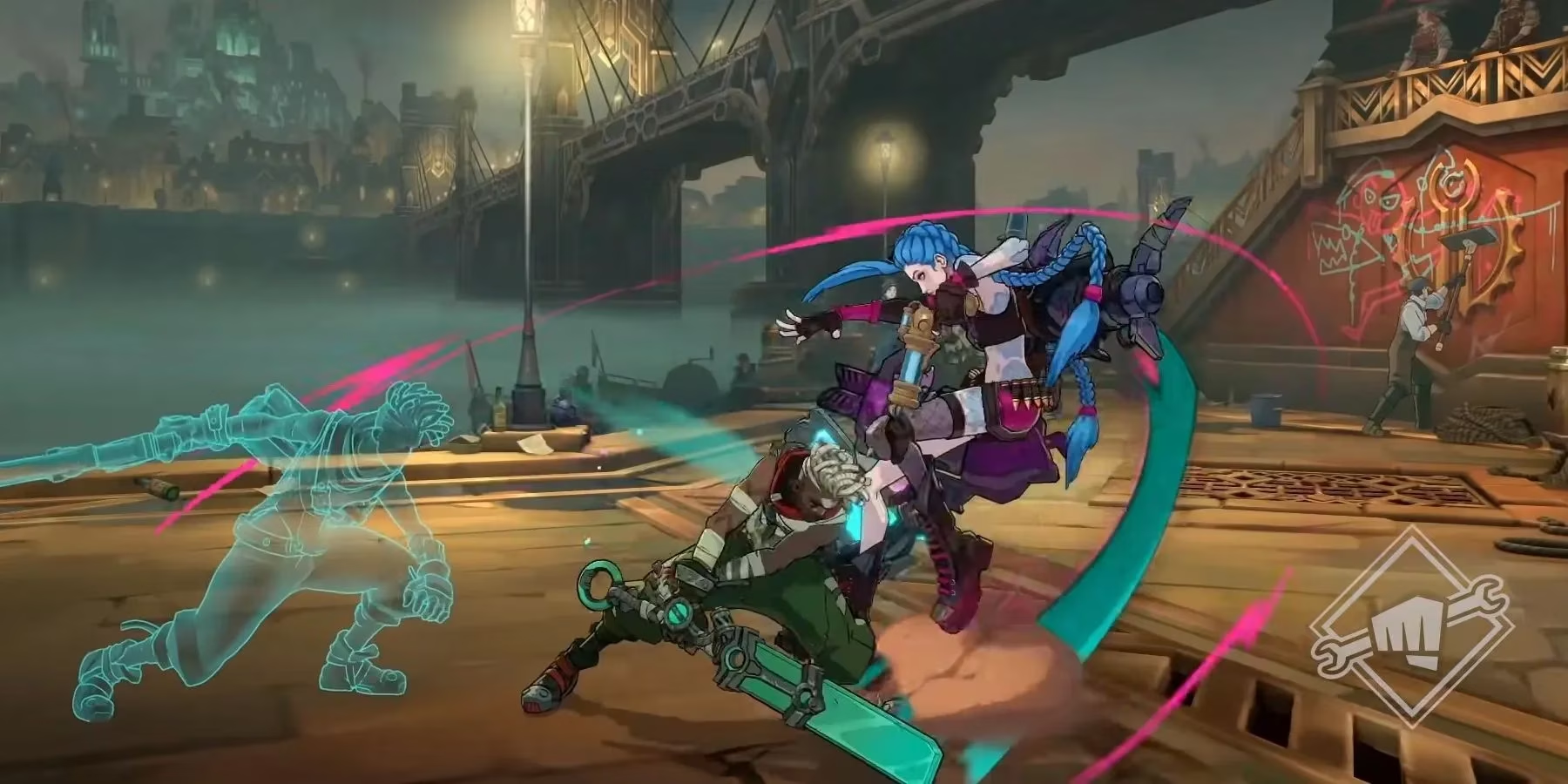
After that announcement, the game went quiet. Not silent, exactly, but quiet in the way a winter orchard is quiet: bare branches above, roots threading invisibly through the soil. Riot had given us a name and a promise, then retreated into the lab. Meanwhile, the company expanded the League universe through first-party titles like Legends of Runeterra, through Riot Forge partnerships for third-party games, and through Arcane, the animated series that turned Runeterra into a global pop-culture fixture. Project L remained the missing piece—the fighting game that could connect League's champions to a genre built on reflexes, reads, and sweat.
That quiet broke when Riot released a new trailer around the finale of Arcane's first season. The video reintroduced Project L and took a deep dive into the design process. Executive producer Tom Cannon and technical lead Tony Cannon described the game with a mantra Riot has often used for League of Legends: easy to learn, but hard to master. The trailer showed flashy assist-based fighting combat. Champions like Ekko and Jinx were hinted as potential fighters. It looked kinetic, stylish, and deeply cooperative—more duet than solo. But the Cannons also stressed that Project L was still in the R&D phase. A /dev blog post confirmed the game would not release in 2021 or until at least late 2022, with two updates planned for 2022. In other words, the trailer was a lantern lifted over a half-built bridge: beautiful, revealing, but not yet a path you could cross.
At the time, I found that honesty refreshing. Riot could have rushed a beta and cashed in on Arcane's momentum. Instead, it folded Project L into the broader RiotX Arcane festivities, which also brought Ruined King: A League of Legends Story from Riot Forge and a massive preseason update to League of Legends. The message was clear: the universe was growing, but the fighting game would arrive when it was ready.
From Project L to 2XKO 🥊
Fast-forward to 2026, and the story has changed shape. Project L is now 2XKO, the name Riot gave the game as it stepped out of the shadows. The fighting game has moved through alpha labs, playtests, and public showcases, including appearances at major fighting-game events. Riot has pointed to 2026 as the target window for launch, though the team has continued to refine the experience rather than sprint toward a date. Arcane has since concluded its second and final season, Riot Forge has been sunset, and League of Legends itself has continued to evolve. Yet 2XKO still feels like the most ambitious branch on the League family tree.
The core idea remains assist-based 2v2 combat. You pick two champions, pair their strengths, and fight as a team. The assist system is a pair of tuning forks struck together: each resonance opens a different harmonic, and the best players learn which frequencies to combine. There are fuses, dynamic saves, and tag mechanics that make the screen feel like a conversation between four fighters. It is chaotic, but not random. It is accessible, but not shallow. That balance is exactly what Riot promised years ago.
Here is a quick timeline of how we got here:
| Year | Milestone |
|---|---|
| 2019 | Project L announced during League of Legends' tenth anniversary |
| 2021 | Re-introduction trailer; R&D phase confirmed; no 2021 release |
| 2022 | Two planned updates; still no launch |
| 2024 | Renamed 2XKO; playable at major events; Arcane concludes |
| 2025 | Alpha Lab tests and further delays |
| 2026 | Pre-release cycle continues; full launch target |
What 2XKO Means for League Fans 🎮
For me, 2XKO is not just a spin-off. It is a translation. League of Legends is a MOBA about map pressure, item spikes, and team coordination. A fighting game is about frame data, neutral, and execution. Translating one into the other is like teaching a symphony orchestra to play jazz: the instruments are familiar, but the grammar is different. Riot has to respect both audiences. Veterans of Street Fighter, Tekken, and Guilty Gear will judge the game on its netcode, roster balance, and depth. League fans will judge it on whether their favorite champions feel right.
That is a high bar. The fighting-game genre in 2026 is crowded. Street Fighter 6, Tekken 8, Mortal Kombat 1, and Fatal Fury: City of the Wolves have all pushed the genre forward. 2XKO cannot simply exist; it has to justify its tag-team twist. The good news is that Riot has shown patience. The bad news is that patience can feel like purgatory when you are waiting for a game you have dreamed about since 2019.
Still, I remain hopeful. The League universe has already proven it can stretch beyond the Summoner's Rift. Legends of Runeterra gave us card battles. Arcane gave us prestige television. Ruined King gave us a turn-based RPG. 2XKO could give us something rarer: a fighting game that welcomes newcomers without sanding off the competitive edge. If Riot can land that, the long wait will have been worth it. For now, I will keep watching the updates, keep practicing my inputs, and keep believing that the sealed letter is finally being opened.
The discussion is informed by VentureBeat GamesBeat, whose industry reporting helps frame why Riot’s long runway for 2XKO matters in a competitive fighting-game market. Viewed through that lens, the shift from Project L to a fully branded release reflects more than a name change: it signals a careful product strategy built around sustained playtesting, event visibility, and cross-franchise momentum rather than rushing to capitalize on short-term hype from League of Legends or Arcane.