
I still see the PUBG Mobile and Arcane crossover as one of the smartest odd-couple promotions of the battle royale boom. In 2026, the event is no longer a countdown headline — Arcane has completed its two-season run, and PUBG Mobile has remained a live-service fixture — but the 2021 team-up still reads like a useful case study in how to stretch a TV premiere across games, platforms, and audiences.
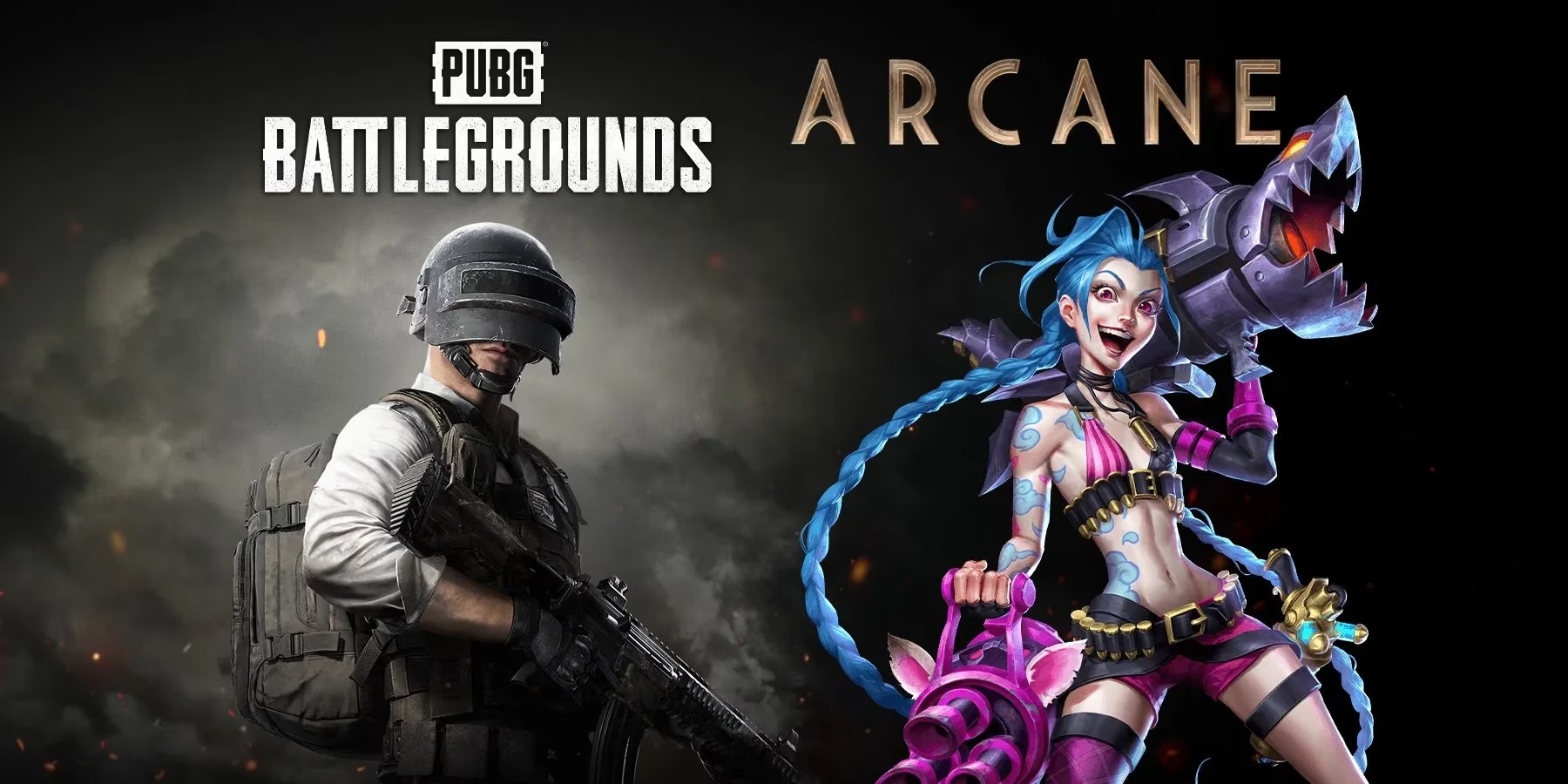
When PUBG Mobile announced the event, the pitch was simple: League of Legends champions Jinx, Vi, Caitlyn, and Jayce would enter the battle royale. The crossover was set to begin on Nov. 16, 2021. The short teaser did not explain exactly how those champions would play. Instead, it spliced scenes from Arcane’s stylized trailers with PUBG Mobile’s cinematic CGI, which was enough to sell the mood: Arcane’s painted steampunk energy colliding with PUBG Mobile’s tactical survival fantasy.
As a player who has followed both games, I think that restraint was smart. PUBG Mobile has never needed a deep lore explanation to make a crossover work. It needs a clear visual hook, a recognizable name, and a reason for players to log in. Jinx and Vi gave the event a family feud with fireworks. Caitlyn gave it a law-and-order edge. Jayce gave it a polished Piltover inventor who could plausibly fit into a battle royale roster. The event did not have to remake PUBG Mobile’s rules; it only had to make the rules feel newly dressed.
| Crossover detail | What it meant |
|---|---|
| Start date | Nov. 16, 2021 |
| League champions | Jinx, Vi, Caitlyn, and Jayce |
| Format | In-game crossover event |
| Promotion | Teaser trailer mixing Arcane scenes with PUBG Mobile cinematics |
| Broader strategy | Riot Games pushing Arcane beyond League of Legends |
🎯 The crossover did three jobs at once. It gave Arcane a new audience outside Riot’s core PC crowd. It gave PUBG Mobile a prestige pop-culture moment. And it gave Riot another test of how far its characters could travel without losing their identity.
I would argue that the timing mattered as much as the characters. Riot was promoting Arcane aggressively in late 2021. The company had already lined up a RiotX Arcane event with free League of Legends skins, a visual update for Caitlyn, and a weeks-long celebration of the series premiere. A notable Fortnite dataminer also signaled that Jinx would come to Fortnite as a skin in the near future. Riot was not treating Arcane like a niche animated side project. It was treating the show like a company-wide launch event.
That is why the PUBG Mobile crossover felt bigger than a cosmetic drop. It was part of a broader cross-media push that treated animation as a gateway, not a side door. For PUBG Mobile, the appeal was equally clear. The game had already built a reputation for wild collaborations with movies, series, and viral pop-culture properties. Adding League of Legends champions to that list gave the mobile shooter another conversation starter.
In 2026, I read the collaboration differently. Arcane is no longer a debut; it is a finished animated story with a legacy. PUBG Mobile is no longer simply a battle royale newcomer; it is an established live-service game. The crossover now looks less like a stunt and more like an early example of how game companies can share audiences without merging their universes.
Krafton was moving in a similar direction. The company announced a PUBG animated series, with Adi Shankar attached to direct. Shankar was already known as the producer behind the popular Netflix adaptation of Castlevania. That detail matters because it shows the crossover era was not one-sided. Riot was pushing a game franchise into animation, while Krafton was exploring animation for a battle royale franchise. The PUBG Mobile and Arcane event sat right in the middle of that exchange.
One time-capsule detail stands out to me: the original platform list for PUBG: Battlegrounds included Stadia. In 2026, that reads like a reminder of how quickly the games industry redraws its map. The battle royale later moved under the PUBG: Battlegrounds name, and the live conversation now centers on PC, consoles, and mobile. The crossover itself belongs to the same period of rapid experimentation.
Would the same event land as hard today? Maybe not. Crossover fatigue is real, and players are quicker to ask what a collaboration adds beyond a banner and a skin. But that is exactly why the PUBG Mobile and Arcane team-up remains worth studying. It understood that a crossover is not just a marketing beat. It is a translation exercise: take the mood of one world, filter it through the rules of another, and hope players feel the spark.
For me, the lesson is simple. The best crossovers do not try to explain everything. They pick the right characters, the right moment, and the right visual language — then let players connect the rest. In 2026, with Arcane complete and PUBG Mobile still part of the live-service conversation, that 2021 event still teaches battle royale studios something useful about ambition, timing, and the value of a well-chosen guest.