
The gaming landscape has shifted dramatically over the past few years, but one of the most tantalizing open secrets in the industry continues to be Riot Games' upcoming MMORPG set in the world of Runeterra. First confirmed by developers back in 2020, the project has weathered staff changes, global disruptions, and an ever-evolving player base. Now, in 2026, with the dust settled on Arcane's second season and the League of Legends IP stronger than ever, anticipation has reached a fever pitch. This isn't just another MMO; it's Riot's attempt to bring the same defiant creativity that transformed the MOBA, tactical shooter, and digital card game genres into a sphere long dominated by a single template.
A World That Demands to Be Explored
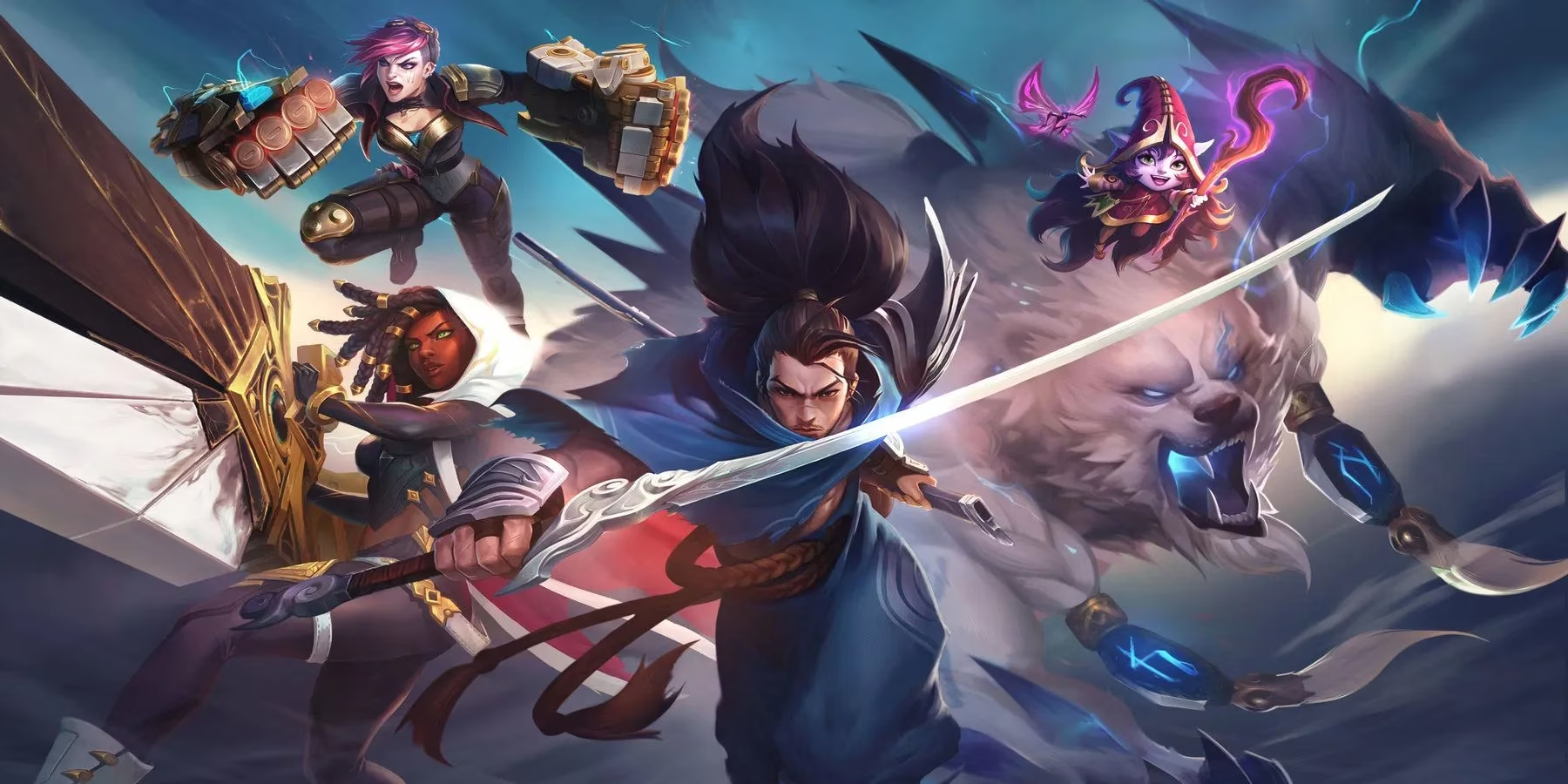
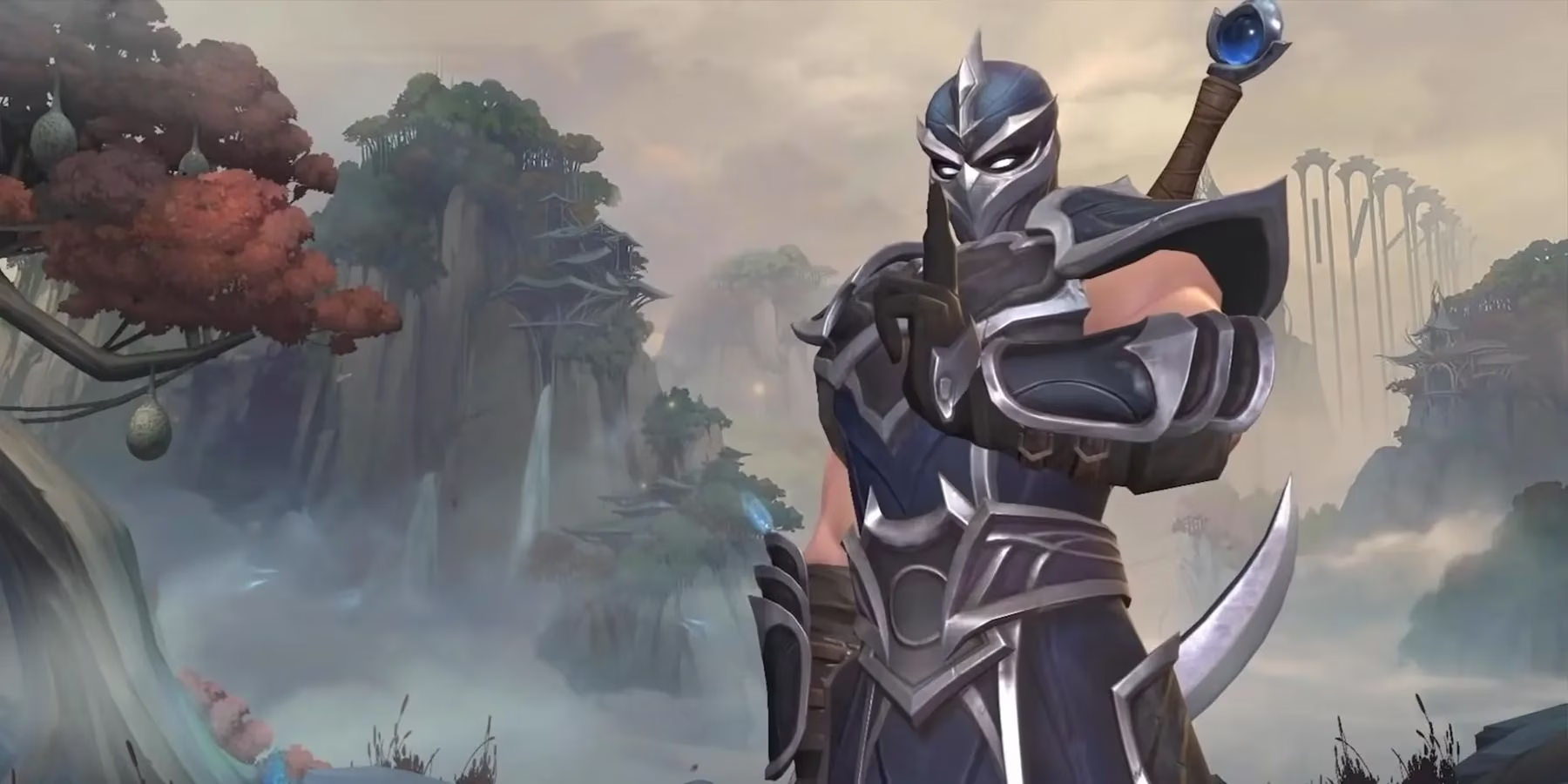
The runaway success of Arcane demonstrated what League players had known for years: the lore of Runeterra is a chaotic, beautiful, and deeply layered tapestry. Unlike fantasy settings that strive for a unified aesthetic, Runeterra thrives on contradiction. The gleaming, steampunk spires of Piltover look down upon the chemtech slums of Zaun, just as the noble ideals of Demacia clash with the cursed nightmares of the Shadow Isles. Every champion in League of Legends can feel as though they walked out of a completely different intellectual property, and yet they all coexist in a world that somehow remains cohesive.
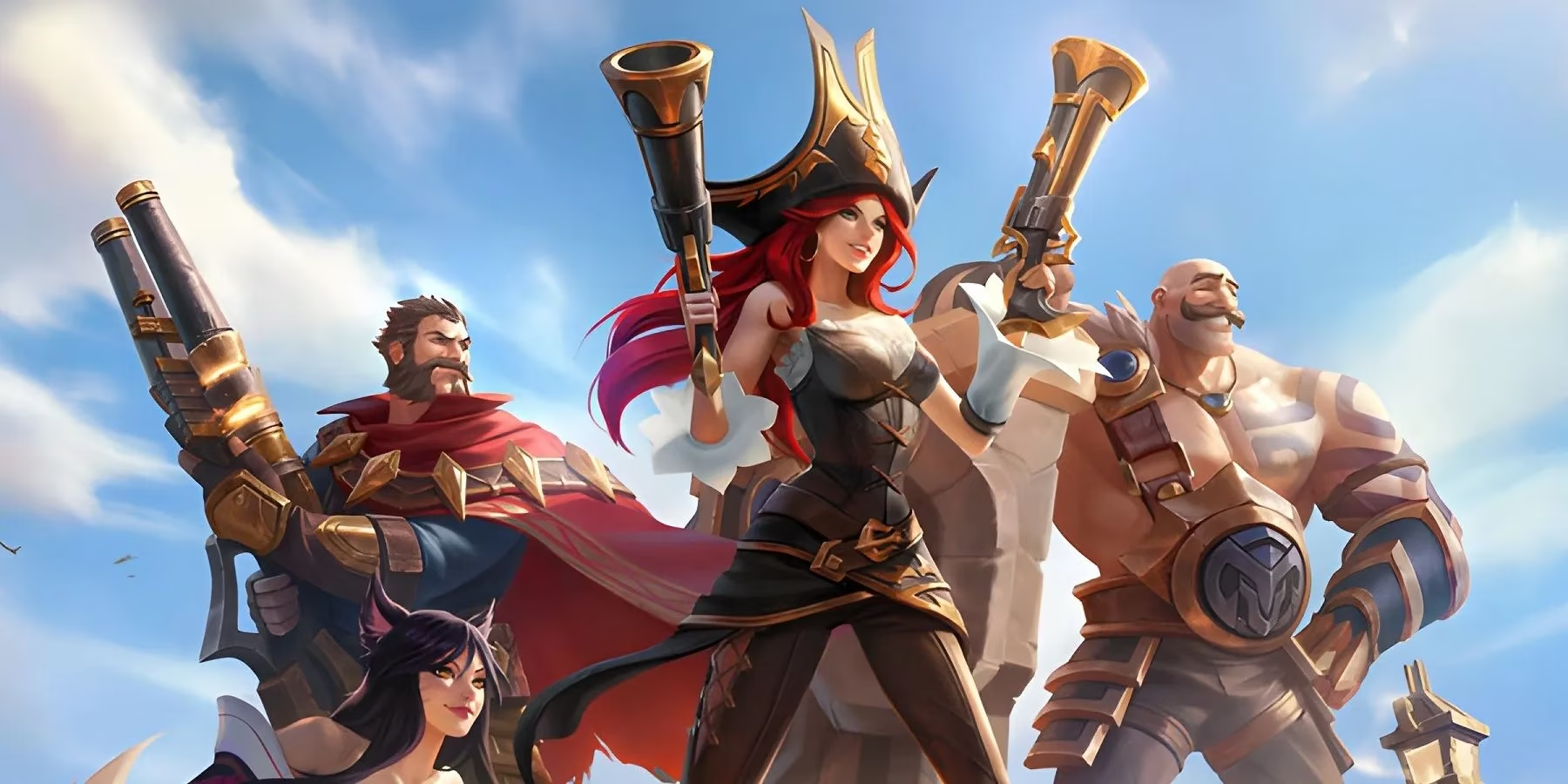
This fragmented unity is the MMO's greatest asset. Developers have spent years fleshing out the nuances of factions like Ionia, Noxus, and the Freljord, and an MMORPG format finally allows players to live inside those stories rather than merely skirmish in them. According to design leads who spoke at a closed-door developer roundtable earlier this year, the team is prioritizing environmental storytelling and regional questlines that adapt based on a player's chosen origin. Imagine starting your journey not with a generic starter zone, but in the heart of Bilgewater, tailing a bounty alongside Miss Fortune, or training under Master Yi in the placid hills of Ionia. That commitment to lore-driven immersion could set the game apart from the current crop of sandbox-heavy competitors.
Rethinking the Holy Trinity
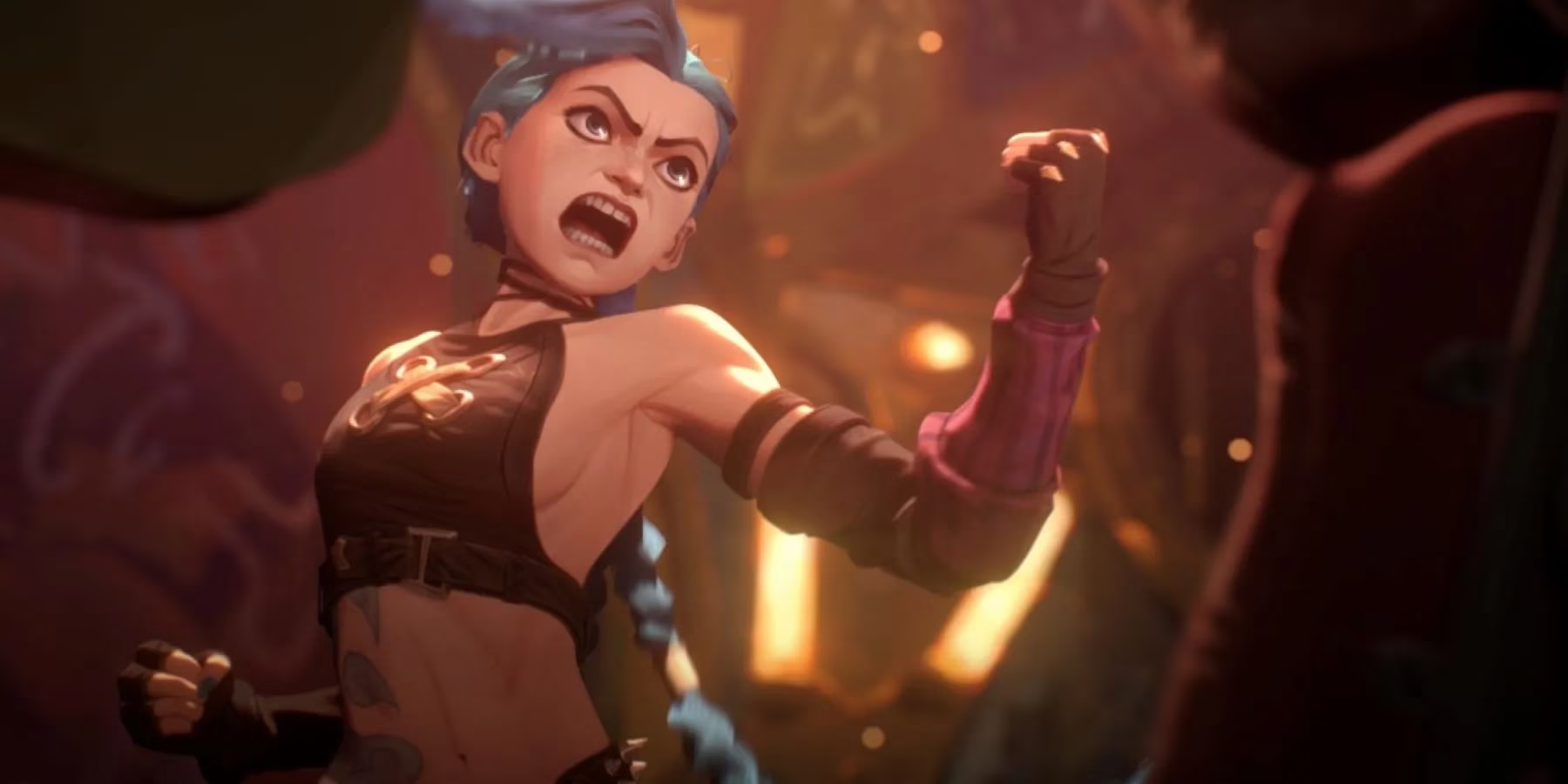
World of Warcraft may have written the playbook for modern MMORPGs, but Riot seems less interested in copying it than in tearing out whole pages. The traditional tank-healer-DPS trinity has defined the genre for two decades, often devolving into a race to the bottom where tanks and healers are underrepresented because pure damage simply feels more rewarding. League of Legends itself has always blurred those lines; champions like Thresh can initiate, peel, and disrupt without fitting neatly into a single box.
Early reports and job listings from Riot's California and Singapore studios hint at a classless or hybrid progression system where movement, positioning, and ability timing matter more than rigid role assignments. This would be a natural extension of the combat seen in recent breakout titles. New World proved that timing-based action combat can work at scale, and Lost Ark successfully married ARPG fluidity with MMO structure. If the Runeterra MMO draws from those experiments and adds League's signature skill-shot mechanics, players might finally get a world where a champion like Braum can shield allies mid-dash or Akali can weave through enemy lines without being locked into a static rotation. The goal isn't to abandon support and protection roles, but to make them as dynamic as any assassin's toolkit.
Monetization That Doesn't Punish
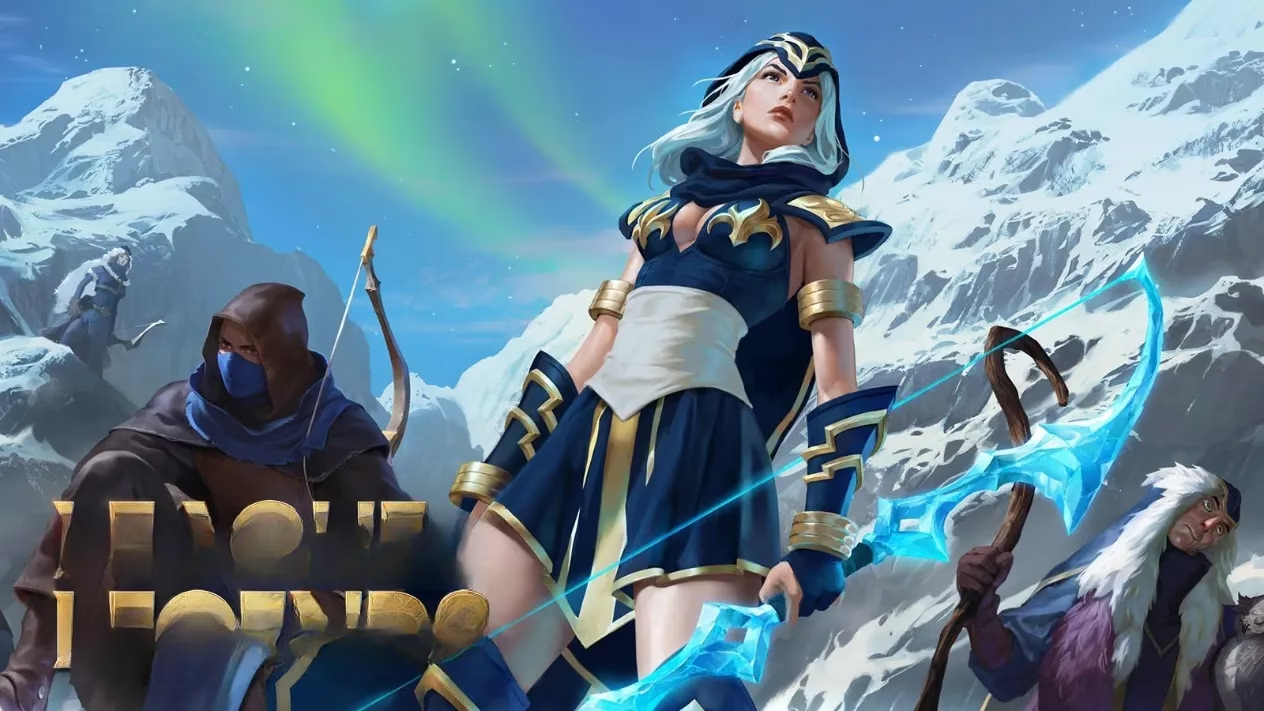
In an era where gamers are increasingly skeptical of predatory pricing, Riot's track record is a strong bargaining chip. Legends of Runeterra became a quiet juggernaut not through aggressive booster packs, but by letting players earn cards at a generous pace and focusing monetization almost entirely on optional cosmetics and vault passes. Valorant and League of Legends itself follow a similar philosophy: the core experience is free, and you pay to look good or express yourself.
Industry analysts expect the Runeterra MMO to adopt a buy-to-play model with extensive free seasons, mirroring the approach of Guild Wars 2 but with Riot's polish. There will be no mandatory subscription fee, which is a relief when Xbox Game Pass and cloud streaming have made monthly fees harder to justify. Battle passes tied to major in-game events, champion-themed skin bundles, and regional housing decorations will likely fund the live-service machine. The critical lesson Riot appears to have learned is that a fair monetization model isn't just good ethics—it's good business, because it builds trust and long-term player retention.
Can the Community Break the Cycle?
Let's address the Krugnar in the room. League of Legends has long been infamous for a player base that can be, at times, profoundly toxic. That reputation might make anyone wonder whether an MMO born from the same IP can foster a different kind of community. The answer is far from guaranteed, but the structural differences between a 5v5 competitive game and a cooperative, quest-driven online world are enormous.
Riot has been publicly iterating on community health systems. Honor rewards have been expanded, and automated moderation tools have grown more nuanced. For the MMO, the studio is reportedly exploring group-finding incentives that reward mentorship and patient explanation over silent speedruns. Events like world boss takedowns and guild territory wars are designed to require communication, which naturally filters for more collaborative personalities. Early closed alpha testers have described a surprisingly warm social space, recalling the early days of Final Fantasy XIV rather than the chaos of solo-queue. Whether that atmosphere can survive millions of concurrent users remains to be seen, but the foundation is being laid with intention.
The Road Ahead
As of 2026, Riot Games has not announced a release date, but the pieces are falling into place. The company has tripled its MMO development staff, brought in veteran talent from Blizzard and BioWare, and conducted multiple technical tests across different server architectures. The success of Arcane season two in late 2024 brought a fresh wave of interest from people who had never touched a MOBA, and those fans represent a massive potential audience for a story-driven MMO.
Riot's approach has always been methodical: wait, watch, and then release something that reshapes expectations. With the Runeterra MMO, they are not just making a game—they are crafting a living world that aims to honor a decade of chaotic, beloved lore while ripping up the rulebook that has governed the genre for too long. Players in 2026 are hungry for exactly that kind of boldness.
As the gaming industry continues to evolve, players are not only seeking immersive experiences but also looking for value in their gaming purchases. With the release of the Runeterra MMO on the horizon, many are keen to explore options that offer both quality and affordability. Whether you're a seasoned gamer or a newcomer entranced by the world of Runeterra, staying informed about the best offers in the market can enhance your gaming experience.
For those eager to dive into this new adventure without breaking the bank, platforms that provide insight into the latest promotions and discounts are invaluable. Websites like best game deals offer a curated selection of gaming offers that can help players make informed decisions. As excitement builds for the new MMO, keeping an eye on such resources ensures that you're ready to embark on your next epic quest without overspending.