
I still remember the buzz when Arcane hit Netflix and Magic players started joking about a crossover. Then Wizards actually announced Secret Lair X Arcane, and suddenly the joke felt very real. Looking back from 2026, this drop is a fascinating snapshot of the moment when Universes Beyond was still finding its feet. It was a limited-run crossover, it leaned hard on Arcane's visual identity, and it stirred up the same debates we still have today about flavor, reprints, and what belongs on a Magic card.
The pitch was simple: two different Secret Lair drops tied to the show. The main Secret Lair X Arcane drop was supposed to feature characters from the series as Legendary Creatures, although the first reveals quickly showed that at least part of the set was a reprint project with Arcane-flavored art and names. The second drop, Secret Lair X Arcane: Lands, focused on locations like Piltover and the Undercity. The full card list was held back until closer to launch, partly because some cards could spoil the show while it was still airing. That was a very 2021 problem, and honestly, it made the whole thing feel like an event.
The first four cards told an interesting story
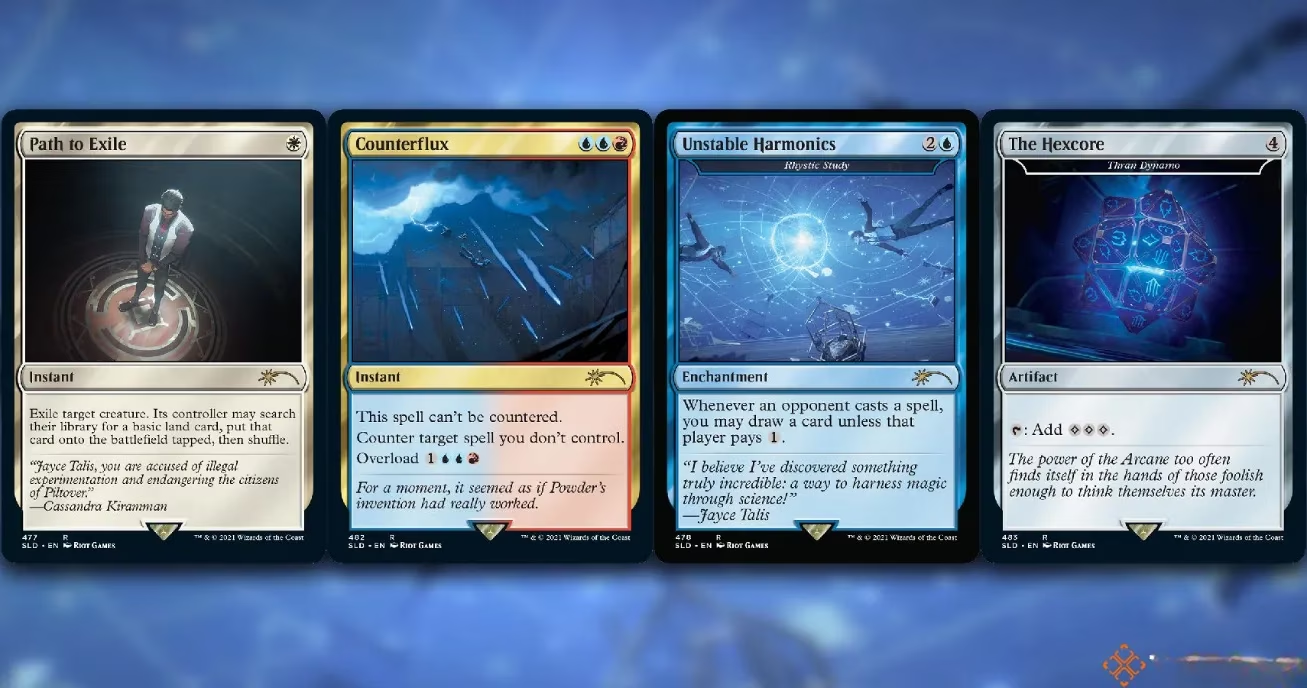
The early reveals were not the character cards many of us expected. Instead, GameSpot showed off four reprints: Path to Exile, Counterflux, Thran Dynamo, and Rhystic Study. Two of them got new names. Thran Dynamo became The Hexcore, and Rhystic Study became Unstable Harmonics. For deckbuilding, they still count as their original Magic cards, which is important because it means these are not mechanically unique cards in the same way as some earlier crossover promos.
| Original card | Arcane name | Role |
|---|---|---|
| Path to Exile | Path to Exile | White removal staple |
| Counterflux | Counterflux | Multicolor counterspell |
| Thran Dynamo | The Hexcore | Mana rock |
| Rhystic Study | Unstable Harmonics | Annoying blue card draw enchantment |
As a player, I found this mix clever but also a little safe. Reprints with new art are easy to slot into decks, and they avoid the awkwardness of printing powerful exclusive legends that never show up anywhere else. But they also make the drop feel less like a full Arcane set and more like a very pretty skin pack. That is not necessarily bad. It just depends on what you wanted from the crossover.
Rhystic Study was the headline for more than one reason
The most talked-about card was Rhystic Study, and not only because it is one of blue's most irritating enchantments. This was only the second time the card had been reprinted without Terese Nielsen's art. The previous version was a highly limited judge promo, so for most players this Secret Lair was the first realistic chance to get a non-Nielsen Rhystic Study. That mattered because Nielsen's relationship with Wizards of the Coast ended after she was caught following and liking tweets from racist, antisemitic, transphobic, and far-right conspiracy theorist accounts. She also appeared on a QAnon podcast and gave the host art. I am not going to pretend that context is fun trivia. It is part of why this reprint felt significant, and it is a reminder that card art and artist history can become part of a card's story whether players want that or not.
The Lands drop was the one that intrigued me most. Piltover and the Undercity are perfect Magic locations, and if the drop really was Arcane-flavored reprints of existing lands, it could have been a solid deal at $29.99 non-foil or $39.99 foil. Secret Lair has always been a limited-window product, and this one ran from November 29 to December 23. You either ordered in that window or you missed it. That scarcity model is frustrating, but it is also why these drops become collectible so quickly.
Universes Beyond was already controversial
At the time, Secret Lair was also being used to build up Universes Beyond, Wizards' umbrella term for third-party crossovers. The Walking Dead crossover had already been one of the most successful Secret Lair events ever, and more were coming: Warhammer 40K, Street Fighter, and Fortnite. Some players argued that this diluted Magic's ongoing story and turned the game into a pop-culture reference soup. Others loved it. In 2026, crossovers are much more normal, but the debate has not really gone away. You can still see the same tension between people who want Magic to feel like Magic and people who want to see their favorite worlds on Magic cards.
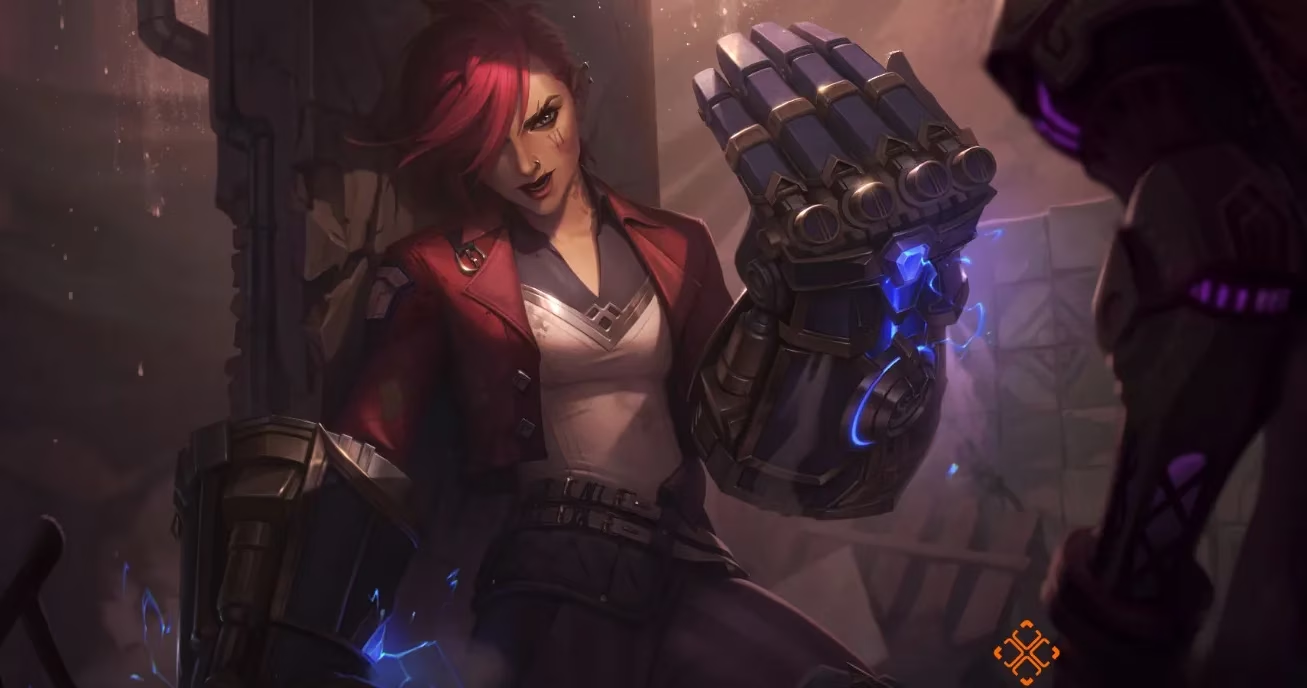
Arcane itself was a phenomenon. It got praise for its animation, its queerness, and its celebration of League of Legends lore. It also drew criticism for its use of pop music and its representation of trans people, and it even had a weird little crossover with Among Us. That is the cultural air this Secret Lair was breathing. It was not just a card drop; it was a tie-in to a show that was dominating conversations online.
One question I still find interesting is whether these Arcane-styled cards would ever appear on Magic the Gathering Arena. Legends of Runeterra is Riot's direct digital card game competitor, so seeing Arcane characters on Magic cards was always a little strange. It felt like two rival toy boxes briefly sharing the same shelf. As a player, I would have loved to see the art in Arena, but I also understand why that was complicated.
Looking back, Secret Lair X Arcane was not the biggest or most mechanically important crossover. It was, however, a perfect example of what Secret Lair does well and what it does awkwardly. The art was gorgeous, the reprints were useful, and the limited window made it feel urgent. At the same time, it showed how crossover Magic can feel like a collage of familiar pieces rather than a coherent world. I would still pick up the Lands drop if I found it at a reasonable price, and I would absolutely use The Hexcore in a casual deck just for the name. That is the player in me talking: sometimes the flavor wins, even when the rules text is exactly the same.