
Every night, a familiar mantra echoes in the quiet before sleep: "Star Guardian is not going to get me to install League of Legends." It's a desperate incantation against the persistent, alluring call of Riot Games' universe. For years, the MOBA demons have been held at bay, their promises of competitive glory and toxic communities failing to corrupt a resolve built on self-preservation. Yet, as 2026 dawns, that resolve is cracking—not under the weight of gameplay, but under the dazzling, irresistible sparkle of cosmetics. The latest Star Guardian event, a sprawling cross-game narrative, has unveiled its treasures for Legends of Runeterra, and the siren song of gorgeous, magical-girl-inspired outfits has never been louder. Is it possible to love a world's aesthetics so deeply while actively avoiding its core game? For one player, that love is becoming a costly, beautiful trap.
Riot Games, it seems, has perfected the art of the chokehold, and the captive is delightfully afraid. The reveal of the Forces From Beyond expansion for Legends of Runeterra was not just an update; it was a declaration of war on willpower. Packed with event-specific skins, boards, emotes, and a seasonal pass, it represents everything that makes free-to-play models so dangerously seductive. At least it isn't the MOBA itself, the player rationalizes. Legends of Runeterra is merely a card game—a gateway, perhaps, but surely a less toxic one. But what is a gateway if not an entrance to something more? The fear is palpable: surrender here might just be the first step toward a far more sinister addiction.
The heart of this conflict was captured perfectly even before the event's launch. The emotional anchor wasn't a gameplay trailer, but a music video. EDM artist Porter Robinson's "Everything Goes On" served as the Star Guardian anthem, a melancholic yet hopeful ballad about moving past grief. Its signature style and poignant lyrics told the stories of these champions in a way raw gameplay never could. Watching it, one couldn't help but feel a connection, a tearful investment in these digital characters' lives. That song distilled the entire ethos of Star Guardian—beauty, tragedy, and resilient optimism—and now, that very essence is being infused into Legends of Runeterra. How can one resist a world that makes you feel so much before you even play a card?
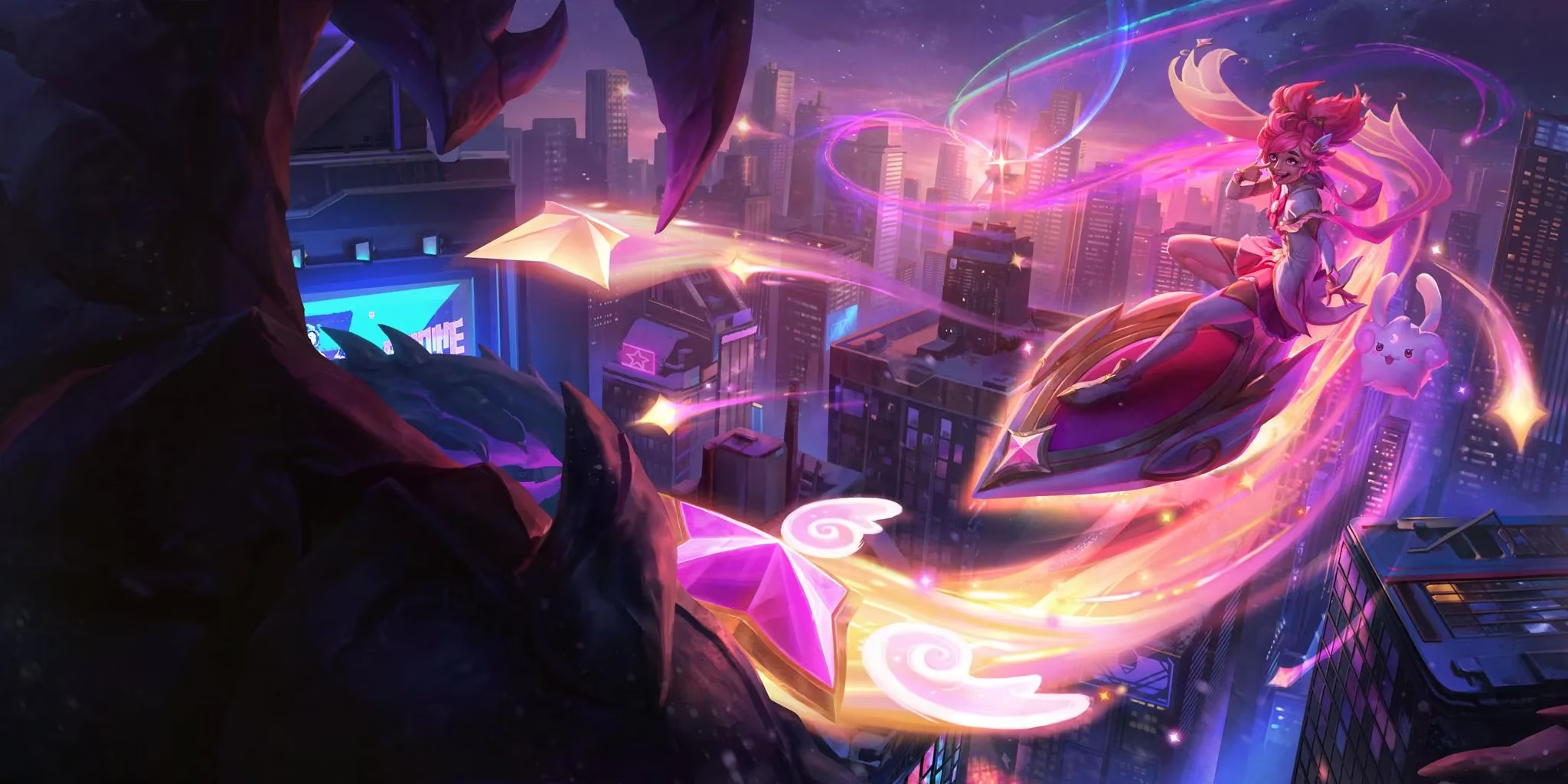
For the uninitiated, Legends of Runeterra is Riot's strategic digital card game, a world away from the frantic lanes of League of Legends. It features:
-
Distinct Champions: Beloved characters from Runeterra, each with unique playstyles and evolving level-up conditions.
-
Innovative Mechanics: A mana system that encourages smart banking and spell-based interaction that feels impactful.
-
Generous Economy: Widely praised for its free-to-play model that doesn't aggressively wall off content behind paywalls.
The player's journey into Runeterra didn't begin with a desire to master meta decks. It began, like for many, with Arcane. The acclaimed animated series was a masterpiece of storytelling that built affection for characters like Jinx and Vi. It created a paradox: a deep love for the world, but a steadfast refusal to subject oneself to the potential misery of the MOBA. Legends of Runeterra presented the perfect compromise. It was far enough removed, offering accessible mechanics and a surprising sense of progression. Robust single-player campaigns (like the Path of Champions) and the ability to upgrade specific heroes gave the game a longevity that felt rewarding, not like time thrown into an uncaring void. It felt like you were building a collection, not just grinding for one.
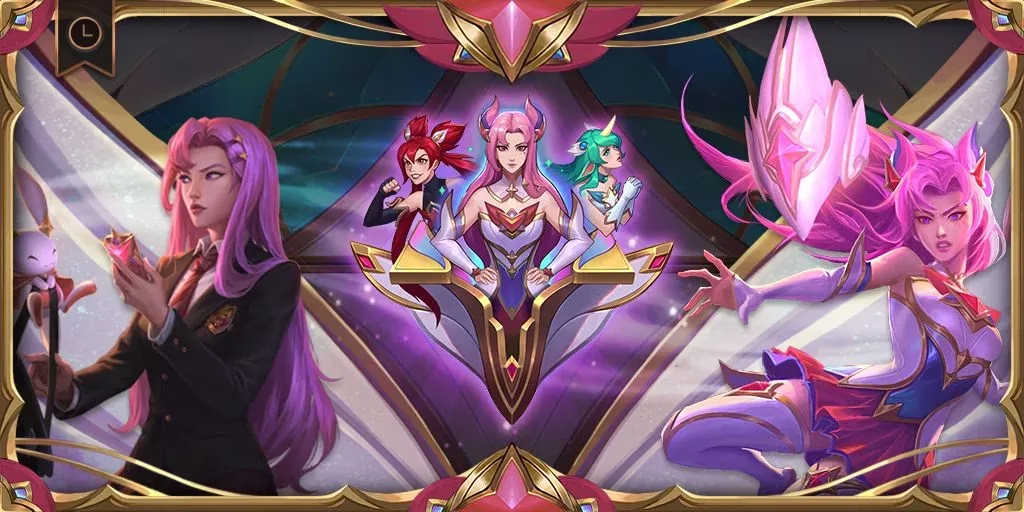
The game's monetization has always felt fair. The best cards and champions are earnable through play, while cosmetics and bundles exist for those who wish to support the game or express themselves. It's a model that welcomes casual players without alienating them, while allowing dedicated fans to indulge. Normally, the player resided firmly in the casual camp. But Star Guardian has changed the calculus. The cosmetic rewards aren't just nice; they are gorgeous. From Taliyah's crystalline earth magic to Quinn's radiant avian companion, each skin is a love letter to the magical girl genre, complete with that subtle, fruity subtext fans adore. The desire shifts from "I might get that" to "I must have them all." The seasonal pass for the event, launching with the expansion, is filled with these bespoke rewards. It promises a structure similar to Arcane's event—rewarding natural, daily play rather than oppressive grinding. This is a relief, as the player admits to being "rubbish" at online play and appreciates not being forced into competitive modes for meaningful progress.
Yet, the seasonal pass is just the beginning. The real test of willpower lies in the store bundles. The player knows, with a sinking certainty, that they will end up buying one. Or perhaps all of them. The logic is flawed but powerful: "Given my ongoing fixation with Star Guardian I know I won't regret it." This self-awareness makes the situation all the more complicated. In the past, games like Genshin Impact were sworn off precisely because their gacha mechanics were recognized as kryptonite to an addictive personality. The principle was clear: avoid systems designed to exploit psychological triggers. But here, the exploitation is different. It's not about the chance to win a character; it's about the certainty of owning a piece of art. Does it matter if the Star Guardian Quinn skin is used in every match or sits pristine in the collection? Not really. What matters is the possessive, simple truth: it's mine.
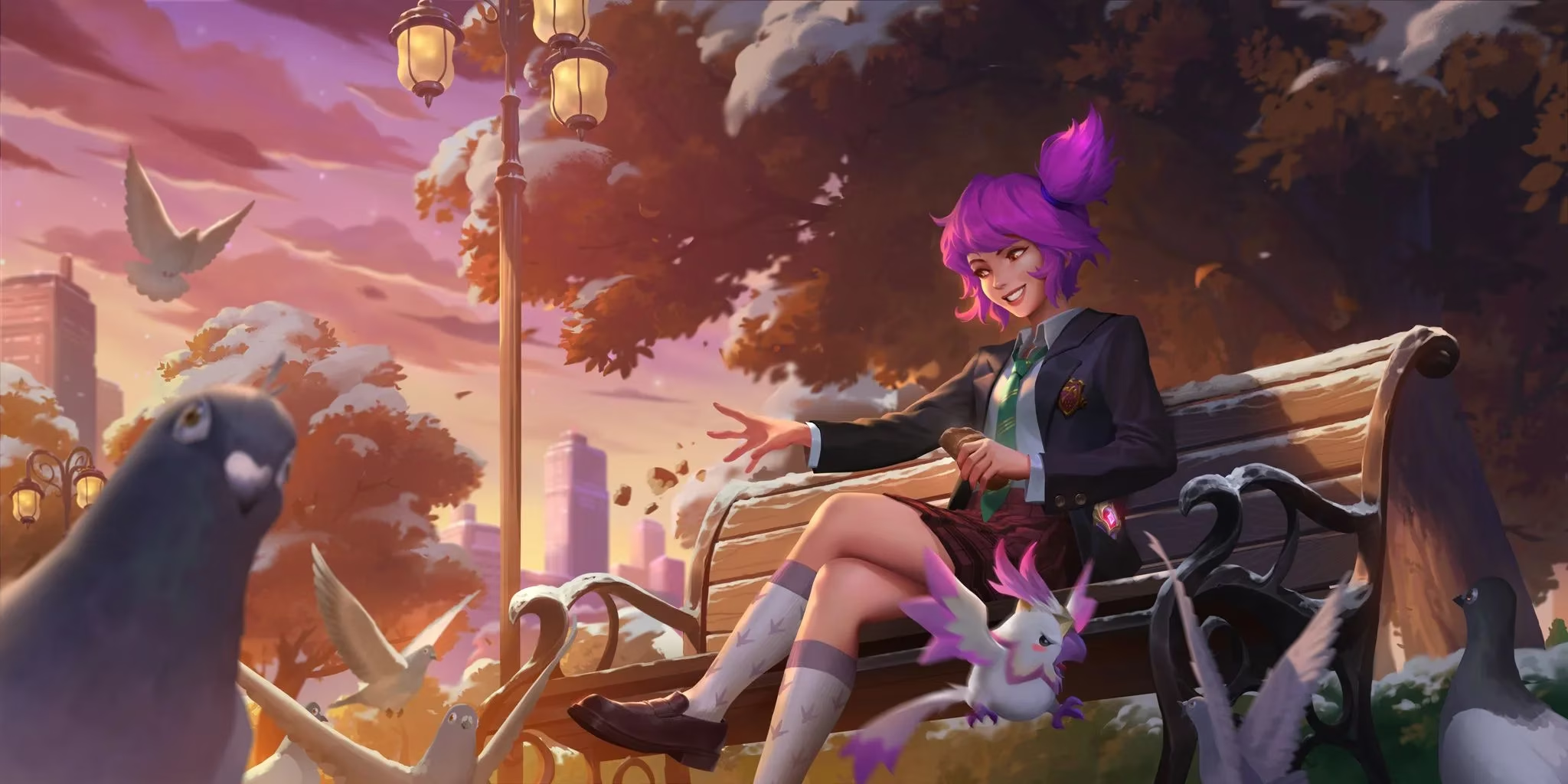
Riot Games is treating the Star Guardian event not as a simple update, but as a marquee blockbuster unfolding across its entire ecosystem—League of Legends, Legends of Runeterra, Wild Rift, and Teamfight Tactics. This ten-week narrative promises new content drops and evolving stories, creating a living, breathing event that demands engagement. It's a masterful strategy, making players feel they are part of a ongoing saga, not just completing a checklist. Millions are ready to dive in and lose themselves. The player vows to be responsible, to enjoy Runeterra as a beautiful, strategic card game and nothing more. A final, desperate plea is issued to the universe: "Be sure to slap me if I end up installing League after all this effort." The battle lines are drawn. On one side, reason and a hard-earned avoidance of MOBA toxicity. On the other, the glittering, hopeful, and utterly fabulous call of the guardians. In 2026, the war for one player's soul—and wallet—is being waged not with swords and spells, but with stunning visuals and the promise of belonging to a beautiful, tragic, and optimistic stars. Who will win? The demons never stood a chance.