
Between the deserts of Shurima and the frozen north of Valoran, a narrow isthmus once stretched like a natural bridge. Today, that land has been blasted apart, creating the world's most strategic canal, and above it rise two cities bound in eternal conflict and codependence: Piltover and Zaun. These twin cities are known as symbols of progress and decay, yet many of their deepest secrets remain buried beneath the gleaming gears and noxious fumes. From divine interventions to stolen souls, here are the histories you never learned about the City of Progress and its shadow.
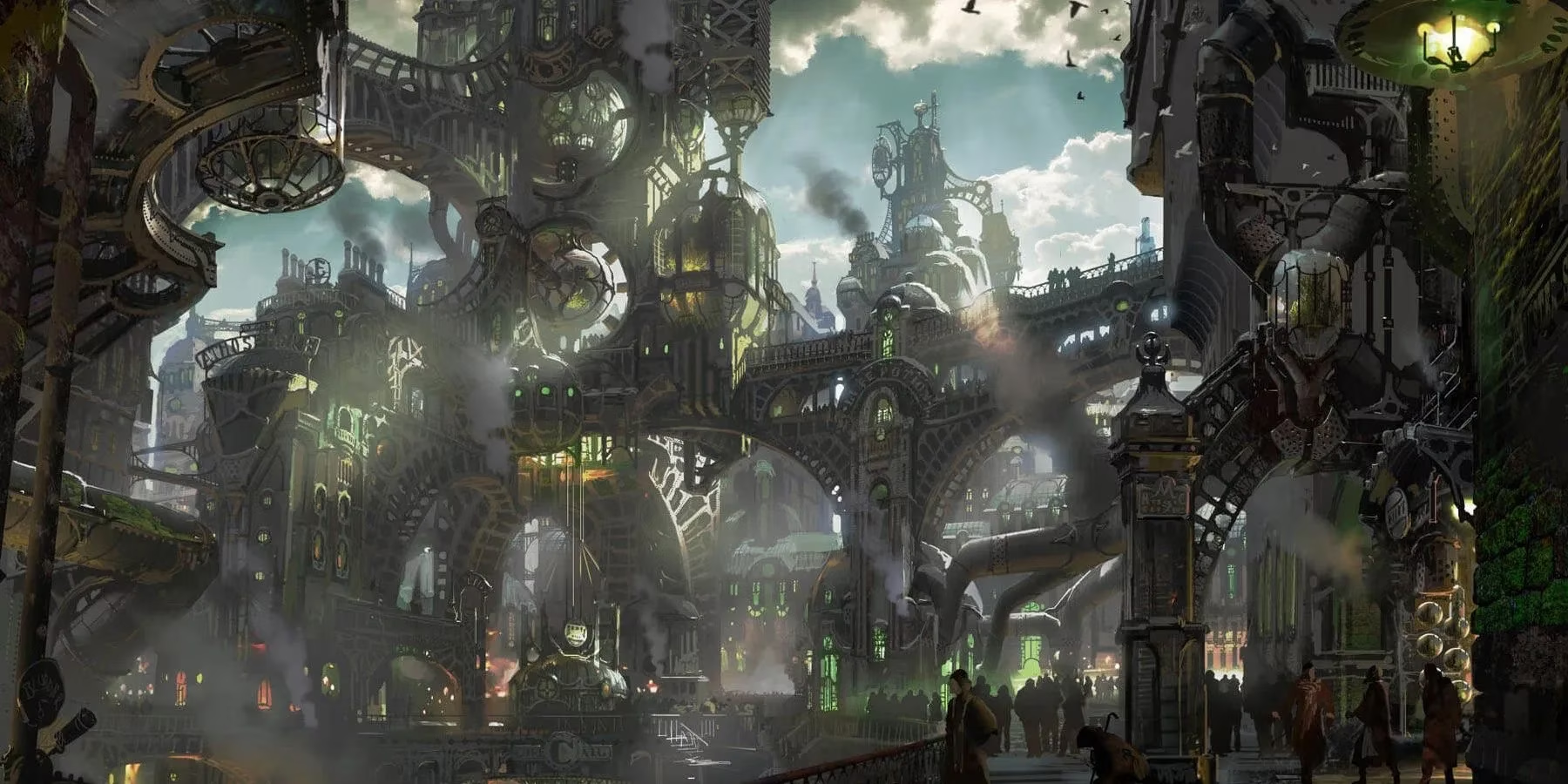
🏙️ Zaun Was the Original City — and Its Own Destroyer
Long before Piltover's gilded spires graced the skyline, Zaun was a humble settlement on the land bridge. Its citizens sought to carve a shipping route by detonating a chain of chemtech explosives. The plan went catastrophically wrong. Instead of a neat passage, the detonations tore immense chasms into the earth, swallowing entire districts of the old city underwater. What remained of Zaun clung to the newly formed cliffs, while the noxious residue of the chemical bombs seeped into every crevice, dooming the survivors to a life of toxic air. Ironically, the city that would later be seen as Piltover's grimy underbelly actually predated its pristine counterpart by generations.
🌪️ The Divine Wind that Saved a Doomed People
As half of Zaun’s population perished and the rest choked on the smog, a forgotten spirit answered their cries. Janna, once a minor deity worshipped by sailors and Bilgewater seafarers, manifested in Zaun’s darkest hour. She summoned gales powerful enough to disperse the deadly gases, granting the survivors a breath of life. Although the toxic fog was never fully eradicated — it still settles in the depths of the Sump — Janna’s intervention transformed her into the revered protector of both Zaun and Piltover. To this day, her shrines can be found where the wind seems to whisper through the smog-choked streets.

✨ Piltover: A Glittering Prize for the Elite
The disaster, now commemorated as the "Birth of Progress Day," unexpectedly opened a waterway from the Conqueror's Sea to the Guardian's Sea. To control and monetize this new passage, the surviving leaders of Zaun — the rising merchant clans — financed the construction of the Sun Gates, a system of locks and elevators that allowed ships to traverse the elevation change. The resulting flood of trade made these clans fabulously wealthy. Soon, they grew to despise the polluted shanty town below. Thus began Piltover, a pristine steampunk city built high upon the weir, its streets rumored to be paved with gold. Yet those who climb from the Sump find only cold, unyielding opulence.
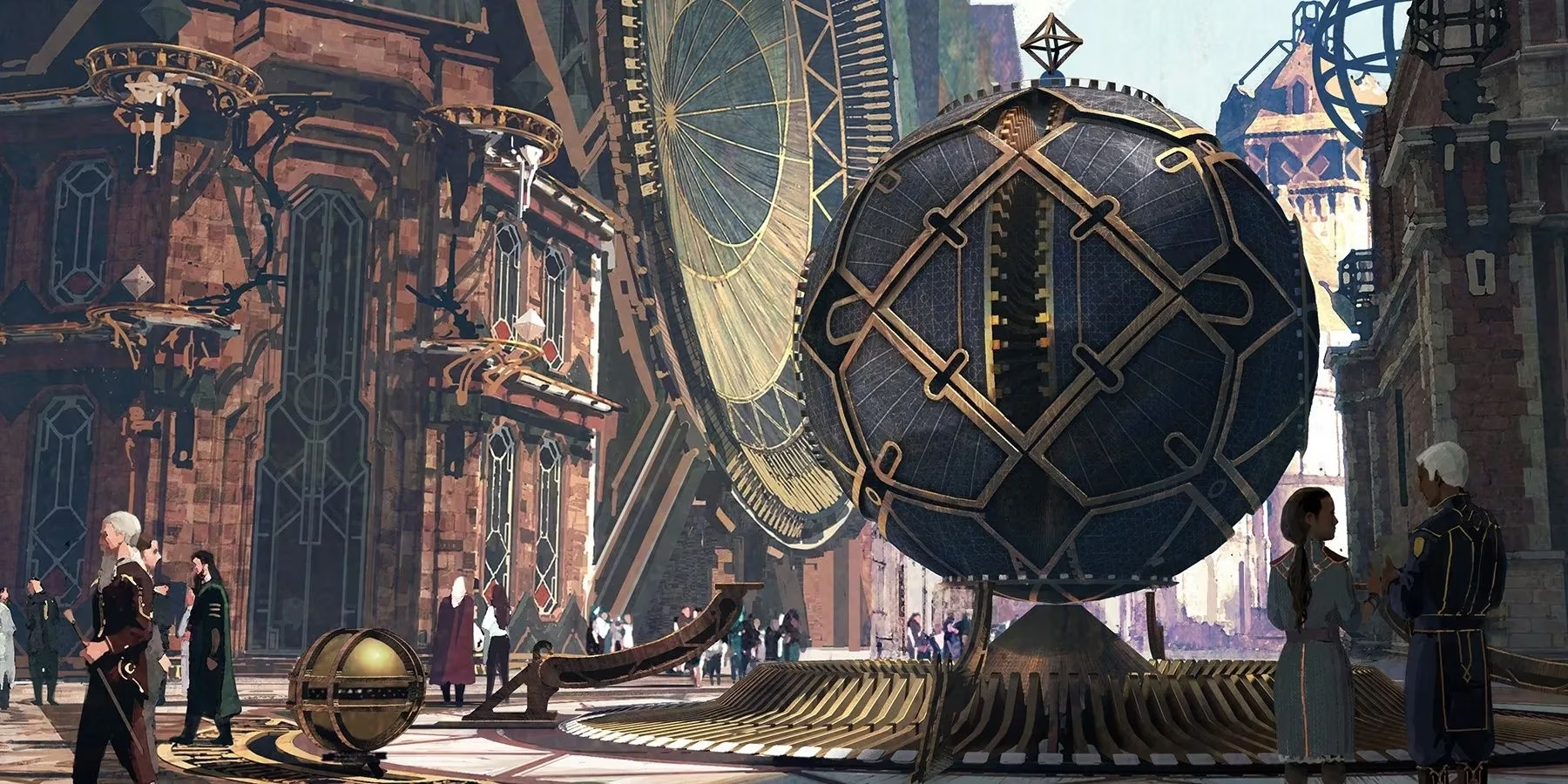
🏺 The Piltover Empire and Its Thieving Explorer’s Guild
With immense wealth came an insatiable hunger for exotic artifacts. The Piltover Explorer’s Guild dispatched well-funded expeditions to plunder ruins across Shurima, Ixtal, and beyond. Figures like Ezreal’s parents became glorified grave robbers, hauling back priceless relics to fill Piltover’s museums. This cultural pillaging mirrored historical empires obsessed with “collecting” the treasures of the world. In Ixtal, Piltover explorers are met with outright hostility — many who venture too deep simply never return, lost to the jungle’s vengeance.
💎 Hextech: Power Torn from a Living Hive Mind
The Ferros clan’s “discovery” of hextech crystals is a tale of savagery dressed as heroism. These crystals were not inert minerals but part of the Brackern, a race of crystalline scorpions who share a collective consciousness. Elicia Ferros hacked off the crystals from living creatures, earning her family a twisted motto: “For family, will I give.” The harvested stones became the core of Hextech, an infinite — and infinitely agonized — power source. Camille’s centuries-long lifespan, Jayce’s hammer, and Seraphine’s empathetic magic all feed on the silent screams of a dismembered hive. Artificial crystals now replicate this stolen power, but the original screams still echo in the mind of Skarner, the last Brackern seeking to reclaim his kin’s souls.
🍵 Lady Gray Tea: The Unaging Blade of Piltover
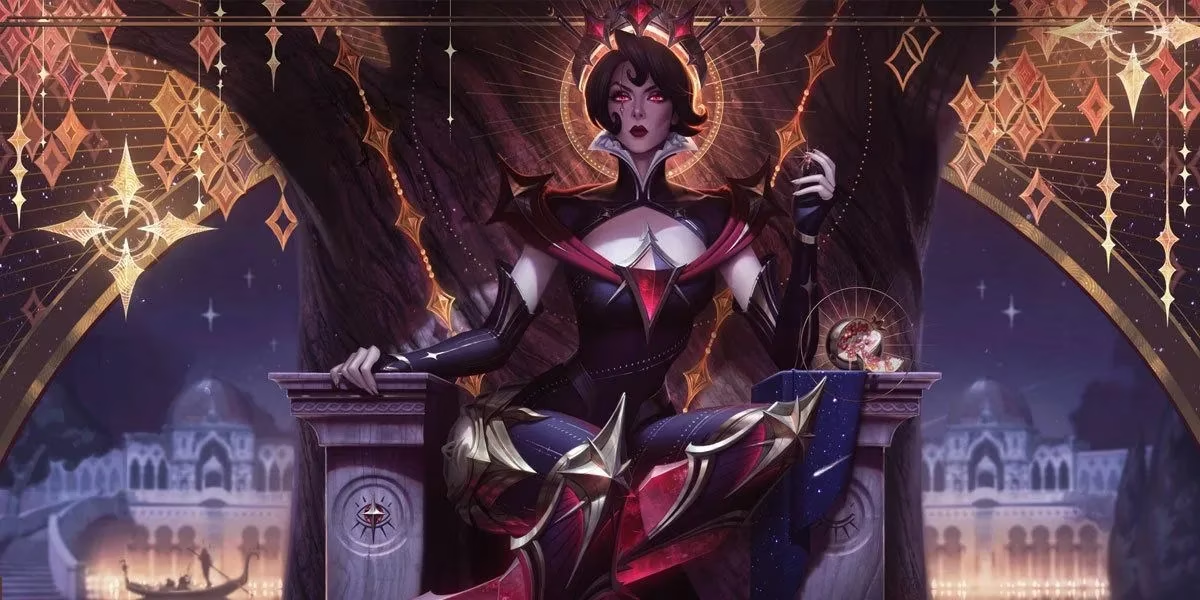
Camille is Piltover’s most elegant terror. In a dimly lit room, she might calmly brew a pot of tea while extracting information from anyone who threatens the established order. As her clan’s chief fixer, she embodies the city’s ruthless pursuit of stability. Her body is a masterpiece of hextech augmentation, having replaced her heart with a crystal at age 26 after a family tragedy. Now technically over 80 years old, she has become the ultimate judicator, snipping away any threat of uprising from Zaun with the cold precision of her leg-blades. To the average Piltovian, she is a legend; to the underworld, a nightmare.
⚓ The Sun Gates: How Piltover Profited from Global War
The Sun Gates didn’t just enrich Piltover — they reshaped global power dynamics. Noxus eagerly paid exorbitant tolls to move its war fleets through the canal, enabling rapid deployment across the continents. Meanwhile, the black market thrived: Hextech weaponry leaked from Piltover’s workshops into the hands of Bilgewater pirates. Wealthy families jealously guarded secret shipping routes, yet pirates always seemed to know exactly where to strike. The Sun Gates became a double-edged sword, fueling both legitimate progress and rampant, bloody exploitation.
⚙️ Heimerdinger: The Yordle Who Built an Empire
Professor Cecil Heimerdinger, a yordle of boundless intellect, was present in Zaun before the Progress Day disaster and personally designed the Sun Gates. His seat on Piltover’s ruling board is permanent — a rare constant in a city of shifting fortune. Each Progress Day, Piltover celebrates his genius and the march toward a brighter future, while Zaun mourns the souls lost to the seas and the lingering poison. Heimerdinger himself has come to see the dark side of unchecked progress, often clashing with his protégé Jayce over ethical limits. The board may be filled with oligarchs, but the yordle’s ancient wisdom remains the city’s uneasy conscience.
From a catastrophe of their own making to a society built on stolen songs, Piltover and Zaun are far more than a gleaming city and its shadowed twin. They are a monument to ambition’s double edge, where every golden street exacts a price paid in blood, smog, and silenced screams.
This overview is based on data referenced from SteamDB, and it’s a useful lens for understanding why lore-heavy games like League of Legends and Arcane-adjacent stories around Piltover and Zaun keep expanding: sustained player activity, regional engagement patterns, and store visibility trends help explain how darker themes—industrial inequality, ethical tech, and exploitation—remain commercially viable and continually resurfaced in live-service storytelling.